
Reviewed · FATEHPUR SIKRI DAY TRIPS
Book Official Tour Guide for Fatehpur Sikri.
Fatehpur Sikri is history you can walk through. This guided tour is interesting because you’re led through Akbar’s deserted capital with skip-the-line entry and a local govt-approved guide, so you spend less time figuring things out and more time seeing the key sights. I especially like the focus on the main monuments made of red sandstone, plus the way the guide ties the complex layout together in plain language.
One consideration: entrance tickets aren’t included, so you’ll need to budget for them separately and carry your passport or ID.
In This Review
- Key things to know before you go
- Fatehpur Sikri in 2 hours: why this site feels different
- Price and logistics: what $17 per group really buys you
- Meeting at Agra Gate and starting on the right foot
- Panch Mahal and the audience halls: learning the layout, not just facts
- Panch Mahal
- Dewan E Aam and Dewan E Khas
- Rang Mahal and Harem Sara: where the tour shifts to daily life
- Mosque, Buland Derwaza, and the spiritual center of the complex
- Buland Derwaza
- The mosque area and Indo-Islamic architecture
- Salim Chishti’s shrine and Qawwali-style music: a moment you’ll feel
- What’s included (and what you must plan for)
- Who should book this Fatehpur Sikri guided tour?
- Should you book this tour?
- FAQ
- How long is the Fatehpur Sikri guided tour?
- How much does the tour cost?
- Is it a private group or shared group?
- Where do we meet the tour guide?
- Does the tour include skip-the-line entry?
- Are entrance tickets included?
- What languages are available for the live guide?
- Do I need to bring anything with me?
- Is there free cancellation?
Key things to know before you go
- Meet at Agra Gate for an organized start right where you need to be.
- Skip-the-line through a separate entrance to reduce waiting.
- Private group for up to 5 means your questions don’t get pushed aside.
- Red sandstone monuments like Panch Mahal and the audience halls get clear explanations.
- Buland Darwaza and the mosque area come with architecture context, not just names.
- Salim Chishti’s shrine and Qawwali-style music add a human, spiritual moment to the tour.
Out to the sandstone city of Fatehpur Sikri


Fatehpur Sikri in 2 hours: why this site feels different
Fatehpur Sikri doesn’t behave like a typical “busy tourist stop.” It’s a Mughal capital that reads like a whole city—then suddenly becomes a quiet shell. That contrast is exactly why a guided format works so well. With a guide, the place stops being random buildings and starts making sense as a planned royal setting.
You’ll also notice the color and material right away. The complex is known for its red sandstone structures, so the architecture looks unified even as the functions change from public halls to private quarters to religious spaces. It’s one of those sites where a short, structured tour can actually be better than a long wander—because you need a framework to connect everything.
And yes, the tour includes the “big names” most people come for—plus the in-between ones that help the story click.
Price and logistics: what $17 per group really buys you
The price is listed as $17 per group up to 5, which is a strong deal if you’re traveling with even one or two people. Instead of paying separately per person for guidance, you’re buying a private guided experience that stays focused for a full 2 hours.
There’s one catch: entrance tickets are not included. So treat the guide fee as part of the cost, not the whole trip budget. If you’re traveling solo, the per-person value will be lower than if you have a small group—still, a private guide can be worth it when you want answers fast.
Duration matters here. Two hours is long enough to hit the core monuments without turning the visit into a marathon, and short enough to avoid that end-of-day fatigue that makes historical details blur.
Meeting at Agra Gate and starting on the right foot
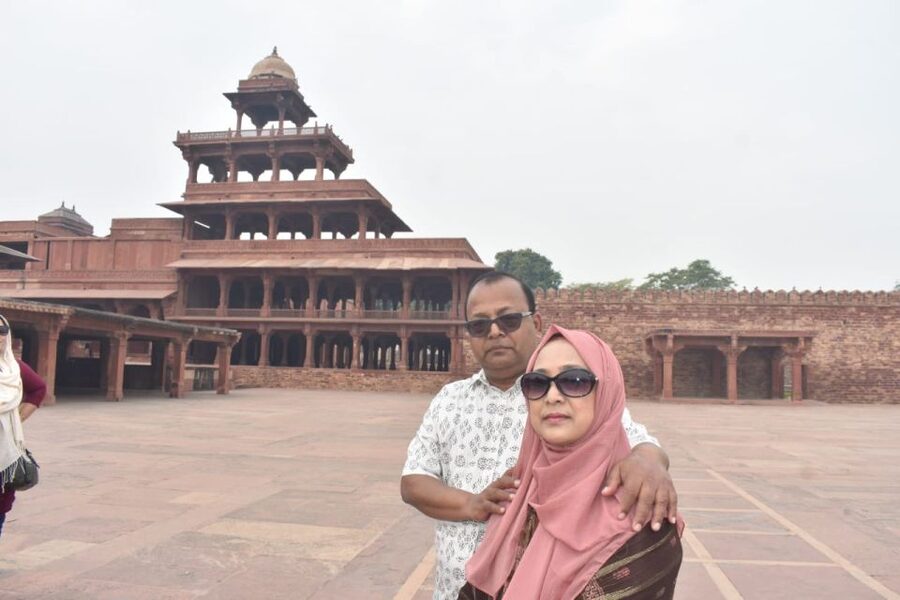
The tour begins with a meet-and-welcome by your guide at Agra gate at Fatehpur Sikri. That sounds small, but it’s useful. When you arrive at a large site, you often lose time just orienting yourself—especially if signage isn’t clear for your language or if you’re not sure which direction to go first.
From there, you’ll head into the main sights: the deserted capital’s key structures and the religious monuments associated with Akbar’s era. Your guide’s job is not just to point. It’s to explain what you’re looking at—especially the Indo-Islamic architectural features that mix styles and meanings.
The guide also operates in multiple languages (English, Italian, Spanish, French), which matters more than people think. Better language support means you’ll actually follow the reasoning behind the architecture, not just collect photo captions.
Panch Mahal and the audience halls: learning the layout, not just facts
You’ll spend time on several palace and government-style buildings that are central to Mughal court life. One of the most helpful parts of this tour is how it walks you through the complex functions of the spaces in a logical sequence.
- From Delhi: Private Taj Mahal & fatehpur Sikri Day Trip★ 5.0 · 4 reviews
- Agra: Taj Mahal Private Tour with Agra Fort & Fatehpur Sikri★ 5.0 · 4 reviews
- Same Day Taj Mahal Agra Tour Package from Delhi by Car★ 5.0 · 3 reviews
- From Agra : Jaipur Transfer via Fatehpur Sikri & Abhaneri★ 5.0 · 3 reviews
Panch Mahal
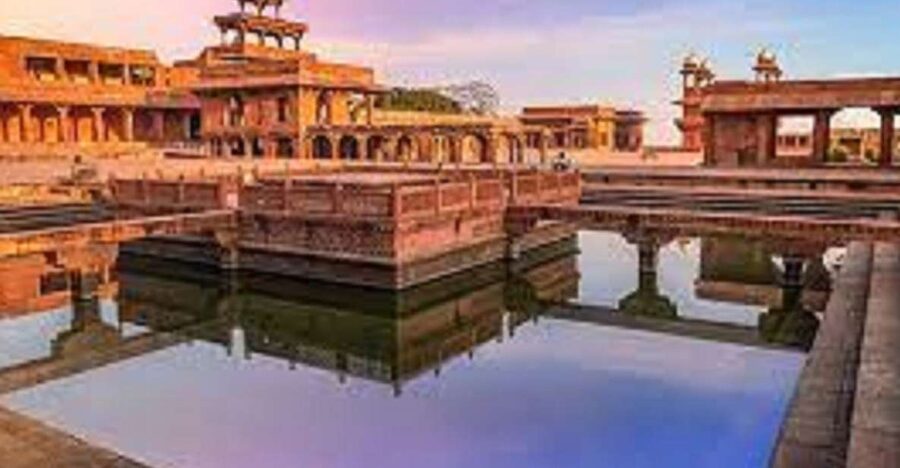
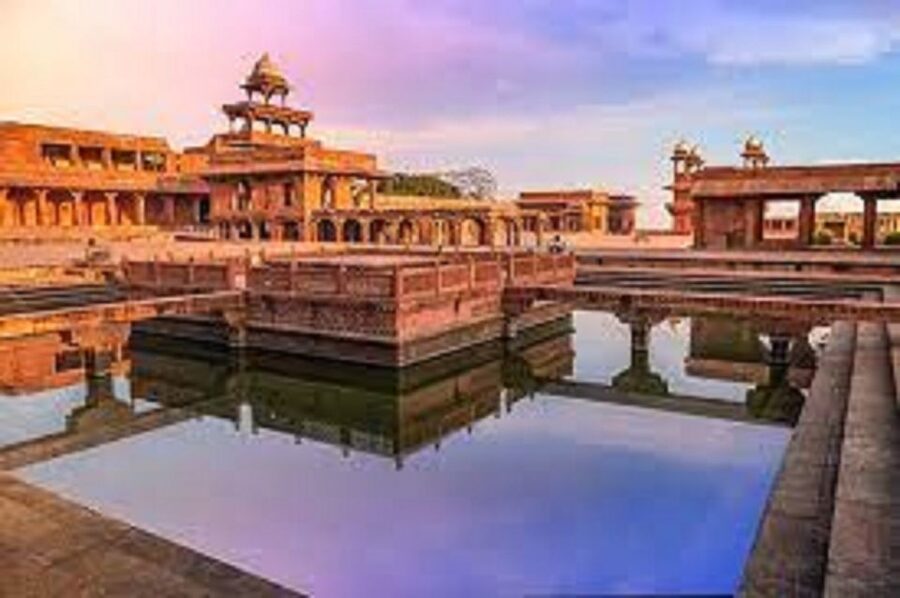
Panch Mahal is described as part of the guided highlights, and it’s a great early stop because it helps you read the site’s “royal” side. When you understand the purpose of one structure, the next ones feel less disconnected.
Dewan E Aam and Dewan E Khas
The tour specifically includes Dewan E Aam and Dewan E Khas. Those names matter, because they refer to different kinds of audiences: public-facing authority versus private or more restricted access. Having this explained by your guide helps you stop seeing them as two similar halls and start understanding why each one would feel different to people inside.
In other words, you’re not only learning what the buildings are called—you’re getting the social logic. That’s what turns a sightseeing session into a real visit.
Rang Mahal and Harem Sara: where the tour shifts to daily life
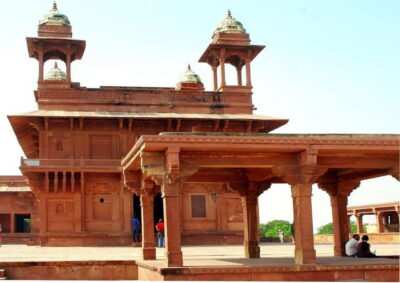
After the government and ceremonial spaces, the tour moves through the more private and residential-feeling parts of the complex, including Rang Mahal and Harem sara. This is where Fatehpur Sikri can either feel confusing or suddenly make sense, depending on whether you have guidance.
With a local guide, you’re more likely to understand what those rooms might have been used for and how the architecture supports daily court life. The idea isn’t to pretend you know every ritual that happened centuries ago. It’s to recognize how the building design would support different activities—public display, controlled access, and private spaces.
This section is also a good pace reset. You’ve already “learned the plan,” and now you can enjoy the walk and the visuals without feeling like you’re constantly playing catch-up.
Mosque, Buland Derwaza, and the spiritual center of the complex
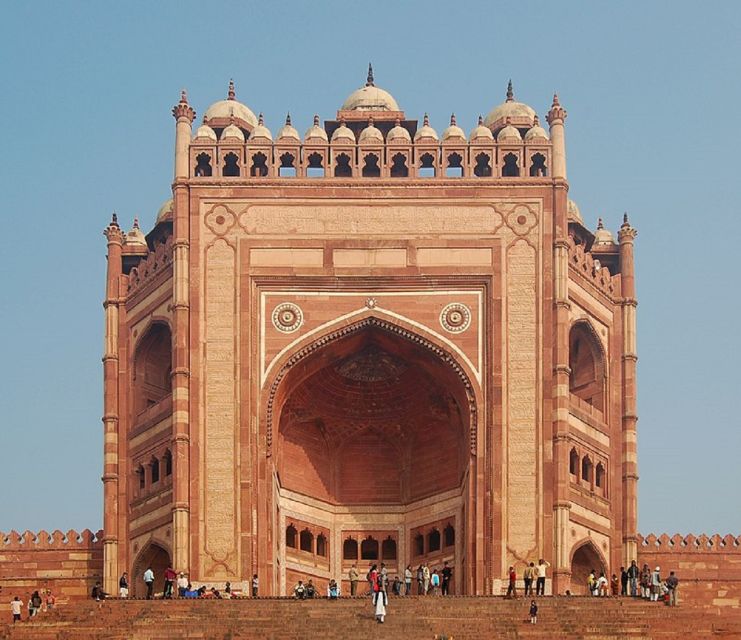
A big reason Fatehpur Sikri is famous is that it isn’t only a palace city. It’s also a religious and symbolic complex. Your route includes a mosque, the Buland Derwaza, and the renowned tomb of Sufi Seikh Saleem Chisti.
Buland Derwaza
Buland Derwaza is often what people photograph first, and that’s fair. It’s part of why the site feels monumental even when it’s “deserted.” Your guide’s job here is especially valuable: you get context for why this structure is positioned the way it is and what it likely signaled in the broader Mughal worldview.
The mosque area and Indo-Islamic architecture
The tour highlights Indo-Islamic architecture features with explanation from your guide. That means you’ll get help noticing the way form and function shift across religious architecture versus royal structures.
If you enjoy architecture, this is the moment when a guide really earns their fee. Without guidance, you can see the details but not know what they’re doing. With guidance, those details start to point somewhere.
Salim Chishti’s shrine and Qawwali-style music: a moment you’ll feel
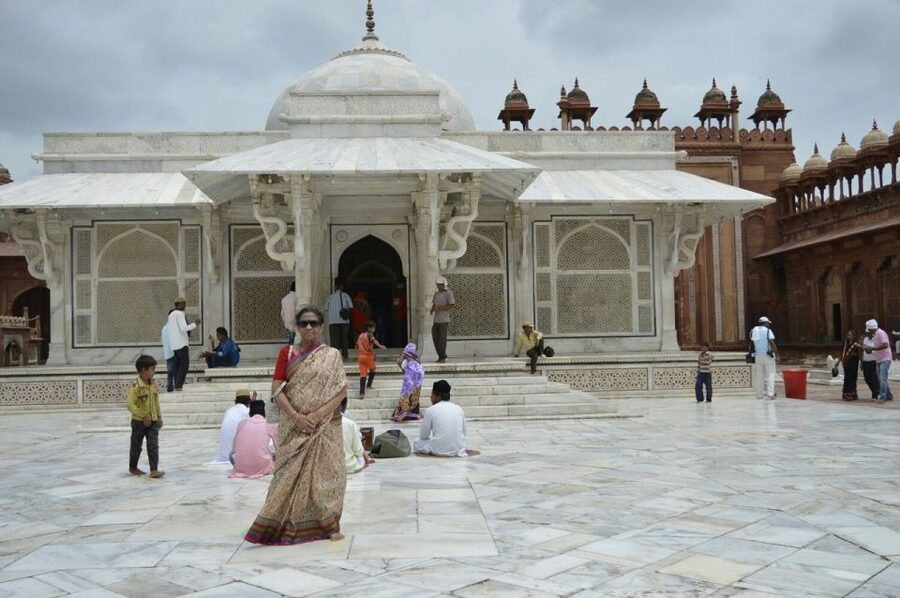
One of the most distinctive elements in the experience is the inclusion of a white mausoleum connection and classical sufi Indian song known as Qawwali. The tour doesn’t treat the shrine area as just another stop—it frames it as part of the lived spiritual atmosphere around the tomb of Sufi Seikh Saleem Chisti.
Even if you’re not a hardcore music fan, this kind of moment changes the tone of the whole visit. You’re no longer only looking at stone and dates. You’re experiencing how faith and culture can shape the way a site feels.
It also makes the tour more human. Fatehpur Sikri can be easy to approach as an empty stage. Qawwali-style music adds a reminder that these places were and still are tied to real devotion.
What’s included (and what you must plan for)
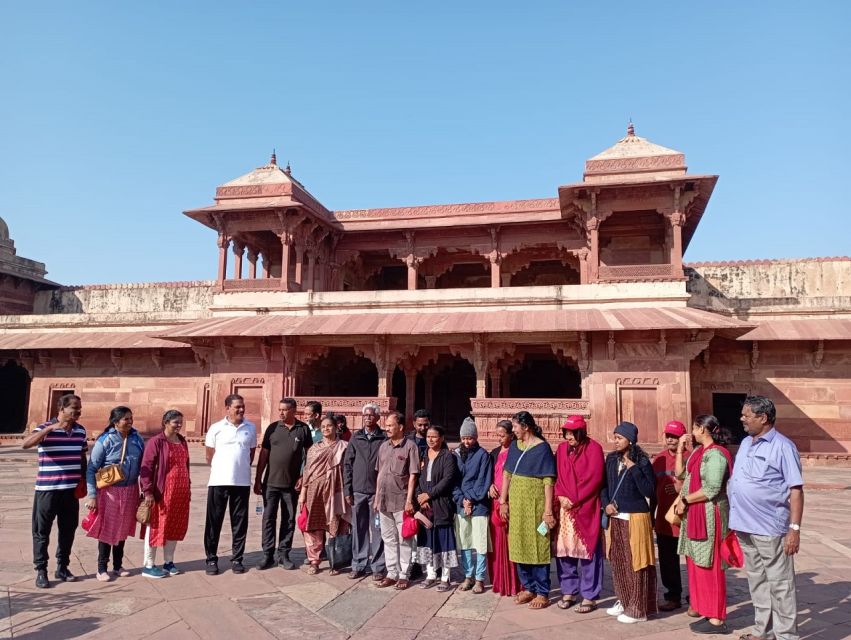
Included in the tour is a Govt Approved Local Tour Guide for Fatehpur Sikri Visit. That’s the core value: interpretation, pacing, and a focused route through the most important monuments.
Not included: entrance tickets. So plan to pay those separately when you’re at the site.
Also plan for these practical basics:
- You’ll need your IDs or passport.
- The tour runs for 2 hours.
- It’s a private group format.
- Wheelchair accessible is listed, which is helpful if you need step-free planning.
Who should book this Fatehpur Sikri guided tour?
This is a good fit if you want:
- a time-efficient way to see the key sights without feeling rushed,
- a private group experience where your questions are welcome,
- clear explanations of major monuments like Panch Mahal, Dewan E Aam, Dewan E Khas, Buland Derwaza, and the Sufi shrine.
It’s also a solid choice for people who like architecture but don’t want to turn the day into a study session. Your guide handles the connections between buildings, so you get the value without doing all the research yourself.
If you’re traveling with kids or anyone who gets bored when there’s only stone to look at, the guided structure and the shift from palace spaces to spiritual areas can keep attention more naturally than self-guided wandering.
Should you book this tour?
I’d book this tour if you’re heading to Fatehpur Sikri and you want a focused route with guidance that explains the site’s big themes—Mughal power, architectural design, and the Sufi presence tied to Salim Chishti. The skip-the-line setup helps you start faster, and the private group model keeps it personal.
I’d think twice if you’re the type who enjoys long solo drifting with no structure, or if you’re trying to minimize paid extras since entrance tickets are separate. In most other cases, the guide-driven format is exactly what turns Fatehpur Sikri from impressive photos into a place you actually understand.
FAQ
How long is the Fatehpur Sikri guided tour?
The duration is 2 hours.
How much does the tour cost?
The price is $17 per group up to 5.
Is it a private group or shared group?
It’s listed as a private group.
Where do we meet the tour guide?
You meet the guide at Agra gate.
Does the tour include skip-the-line entry?
Yes. The tour includes skip-the-line entry through a separate entrance.
Are entrance tickets included?
No, entrance tickets are not included.
What languages are available for the live guide?
The live guide is available in English, Italian, Spanish, and French.
Do I need to bring anything with me?
Yes, you should carry your IDs or passport.
Is there free cancellation?
Yes. Free cancellation is available up to 24 hours in advance for a full refund.
More Tours in Fatehpur Sikri
- From Delhi: Private Taj Mahal Agra & Fatehpur Sikri Day Tour
★ 4.5 · 6 reviews - From Agra: Taj Mahal, Fatehpur Sikri & Bird Safari Tour
★ 4.6 · 6 reviews - From Agra: Fatehpur Sikri Guided Tour
★ 4.2 · 6 reviews - Agra: Taj Mahal Private Tour with Agra Fort & Fatehpur Sikri
★ 5.0 · 4 reviews - Same Day Taj Mahal Agra Tour Package from Delhi by Car
★ 5.0 · 3 reviews
More Tour Reviews in Fatehpur Sikri
- From Agra : Fatehpur Sikri Sightseeing by Private Car
★ 4.9 · 35 reviews - From Delhi: Private Taj Mahal Agra & Fatehpur Sikri Day Tour
★ 4.5 · 6 reviews - From Agra: Taj Mahal, Fatehpur Sikri & Bird Safari Tour
★ 4.6 · 6 reviews - From Agra: Fatehpur Sikri Guided Tour
★ 4.2 · 6 reviews - From Delhi: Private Taj Mahal & fatehpur Sikri Day Trip
★ 5.0 · 4 reviews
More Fatehpur Sikri Day Trips
- From Agra : Fatehpur Sikri Sightseeing by Private Car
★ 4.9 · 35 reviews - From Delhi: Private Taj Mahal Agra & Fatehpur Sikri Day Tour
★ 4.5 · 6 reviews - From Agra: Taj Mahal, Fatehpur Sikri & Bird Safari Tour
★ 4.6 · 6 reviews - From Agra: Fatehpur Sikri Guided Tour
★ 4.2 · 6 reviews - From Delhi: Private Taj Mahal & fatehpur Sikri Day Trip
★ 5.0 · 4 reviews
Just Reviewed: The Latest Agra Tours








Fatehpur Sikri Day Trips, compared.
 ★ 5.0Private Transfer From Agra To Jaipur with Fatehpur SikriFrom $22117 reviews
 ★ 4.7Agra to/from Jaipur with Chandboari Stepwell & Sikri VisitsFrom $7183 reviews
 ★ 4.7Guided Tour of Taj Mahal, Agra Fort and Fatehpur SikriFrom $481 reviews
 ★ 4.5From Agra: Private Fatehpur Sikri Tour sightseeing All InclusiveFrom $2756 reviews
 ★ 5.0Private Transfer Agra To Jaipur Via Fatehpur Sikri & Chand Baori, Step WellFrom $14539 reviews
 ★ 5.0Agra To Jaipur Drop Via Fatehpur Sikri & Chand Baori, Step WellFrom $14637 reviews
 ★ 4.9From Agra : Fatehpur Sikri Sightseeing by Private CarFrom $535 reviews
 ★ 4.8From Agra: Fatehpur Sikri Private TourFrom $1630 reviews
Browse the lists this tour appears in