

Reviewed · JAIPUR & RAJASTHAN DAY TRIPS
Gwalior Tour – Same Day Tour to Gwalior From Agra
A hilltop fort in one day sounds great. This same-day Gwalior excursion from Agra strings together a steeper-than-it-looks morning at Gwalior Fort, a couple of major religious sites, and museum time—served with an air-conditioned vehicle and an English-speaking driver.
If you like history you can actually walk through (not just read about), this day plan gives you that.
I especially like that you get a guided walk through the big sights with admission tickets handled for you. And the included buffet lunch happens at a royal palace that’s now one of the city’s better-known hotels—so you’re not stuck hunting for food halfway through the day.
The only real catch is the pace: it’s an early start and roughly 12 hours total with a 120 km drive each way, so comfortable shoes and patience will matter.
In This Review
- Key highlights you’ll care about
- Why this one-day Gwalior plan fits (and how it feels)
- Gwalior Fort first: the steep hill, the key buildings, and the art
- What to watch for (so the 1 hour feels worth it)
- Sas Bahu Temple: two temples joined, built for Vishnu
- Data Bandi Chhod Qilla Gwalior: the Sikh release story
- Gujari Mahal Archaeological Museum: when your lunch stop turns into downtime
- The trade-off
- Jai Vilas Palace Museum: the Scindia legacy in public-facing form
- Lunch at a palace-hotel: when the included meal actually helps
- Price and logistics: does $75 make sense for this day?
- Timing, comfort, and small ways to make the day easier
- Who should book this tour (and who should skip it)
- Should you book the same-day Gwalior tour from Agra?
- FAQ
- FAQ
- What time does the tour start?
- How long is the Gwalior day trip?
- How far do you travel from Agra to Gwalior?
- What’s included in the tour price?
- Is lunch included?
- Are entrance tickets included?
- What about children and pricing?
- Is this a private tour?
- What’s the cancellation policy?
Key highlights you’ll care about
- A guided, admission-included Gwalior Fort visit that focuses on the key interior spots (not just a quick photo stop)
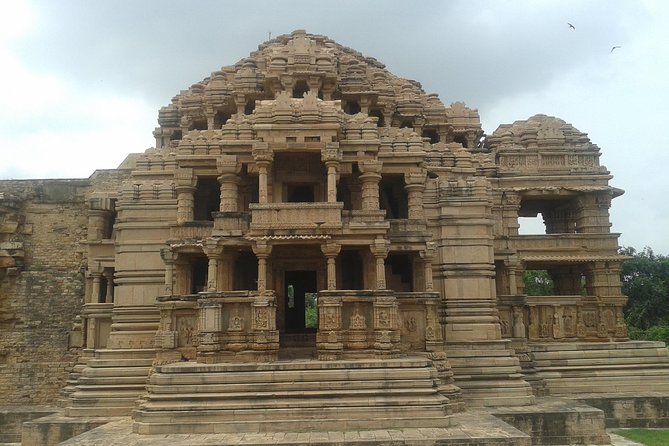
- Sas Bahu Temple’s architecture story—two connected temples with a “Sahastrabahu” name twist
- Data Bandi Chhod Qilla Gwalior (Sikh site) tied to Guru Har Gobind Sahib’s imprisonment and release
- Gujari Mahal’s museum angle with artifacts and sculpture dates reaching back to the 1st–2nd centuries BCE
- Jai Vilas Palace museum access to the Jiwajirao Scindia Museum area that opened to the public in 1964
- Practical ride support: AC vehicle, bottled water (2 per person), WiFi, and all fees handled
On towards Jaipur and Rajasthan
Why this one-day Gwalior plan fits (and how it feels)
Gwalior sits in the middle of your day in the best way: it’s close enough to do as a day trip from Agra, but different enough to feel like a real change of scenery. The tour starts at 7:00 am, and you’ll leave Agra early after breakfast. Then it’s a 120 km drive toward Gwalior in a private, air-conditioned vehicle with an English-speaking driver.
This is the kind of itinerary that works when you’re short on time but still want variety: a hill fort with significant buildings and carvings, temples with very specific religious backstories, and museum stops where you can slow down for a bit. You’re also traveling with a personal guide, so the stops aren’t just “look and move on.”
The trade-off is that you won’t have that slow, wandering freedom you might get on a multi-day trip. Plan to enjoy the structure, not fight it.
Gwalior Fort first: the steep hill, the key buildings, and the art
Your biggest block of time goes to Gwalior Fort—about 1 hour, with the admission ticket included and your guide meeting you at arrival. The drive gets you there early, which is a smart move for both comfort and photos.
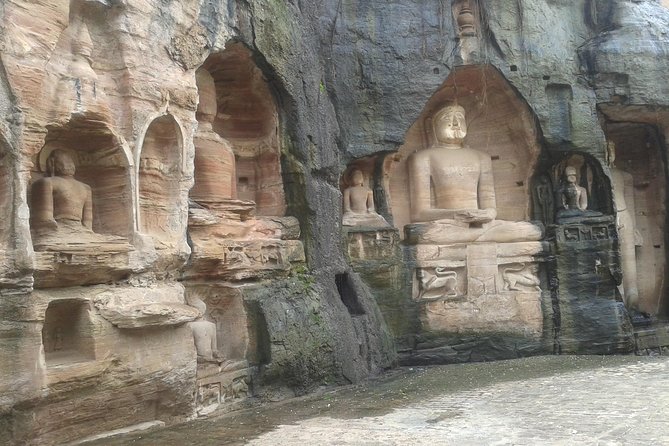
Gwalior Fort is famous for being a hilltop fort, and it was built in the 8th century CE by Raja Maan Singh Tomar. Inside, the tour focuses on the most meaningful parts of the fort complex, including Man Mandir and Karan Mandir, plus an Archaeological Museum area.
One of the most interesting details is that the fort is tied to Gopachal, the steep hill site where Man Mandir is associated. You’ll also see wall art that the fort is known for—so you’re not only dealing with architecture, you’re dealing with decoration and storytelling carved into stone.
Practical note for your comfort: even if the time is only 1 hour, fort interiors can involve uneven ground and steps. Wear shoes you’d actually trust on stairs. I’d also keep water handy even though bottled water is part of the tour.
What to watch for (so the 1 hour feels worth it)
- Look for how the buildings are grouped inside the fort rather than treating it like one random climb.
- Ask your guide what you’re seeing at Man Mandir and Karan Mandir—your time stays tight, so you want your guide’s explanations up front.
Sas Bahu Temple: two temples joined, built for Vishnu
After the fort, the next stop is Sas Bahu Temple, with about 30 minutes on the clock and admission ticket included. This temple complex is dedicated to Lord Vishnu. The text you’ll hear ties Vishnu to the name Sahastrabahu—the one with many hands. Then the name becomes “Sas Bahu,” which likely reflects how words can shift through pronunciation over time.
The story behind the architecture matters here. The temple complex is associated with King Mahipala, and it was completed in 1092 AD. What you’ll see is that there are two temples that are conjointly known as the Sas Bahu Temple: one larger and one smaller. Even the “who’s who” nickname—mother-in-law and daughter-in-law—is linked to that size difference.
Why I like this stop: it’s not just another temple photo. Your guide can point out the architectural skill and how the complex has two parts that feel designed, not accidental.
Time reality: 30 minutes is enough to understand the layout and take in the main features, but not enough to linger for long. If you like careful detail work, treat this as a “get the story first, then enjoy what you can see.”
- Agra: Skip-the-Line Taj Mahal & Agra Fort Private Tour★ 4.9 · 1,546 reviews
- Agra: Taj Mahal Express Entry Tickets★ 4.8 · 684 reviews
- Agra: Taj Mahal and Mausoleum Guided Tour with Skip-the-Line★ 4.8 · 631 reviews
- Agra: Taj Mahal & Mausoleum Skip-the-Line Tour with Options★ 4.9 · 456 reviews
- Private Guided Tour of Agra★ 5.0 · 420 reviews
Data Bandi Chhod Qilla Gwalior: the Sikh release story

Next comes Gurdwara Data Bandi Chhod Qilla Gwalior, also with about 30 minutes and admission included. This site is tied to the story of Guru Har Gobind Sahib and the imprisonment connected to Gwalior Fort. The clue is right in the name: “Bandi” means imprisoned, and “Chhor” means release.
According to the tour’s description, Guru Har Gobind Sahib’s release is linked to an outcome where he managed to win freedom for 52 rajas (kings) who had been suffering imprisonment in the fort.
This stop works well after the fort and temple, because you’re still in a religious-and-political zone of meaning, just viewed through a different faith lens. You’ll feel how Gwalior’s identity has been shaped by rulers, conflicts, and spiritual movements—not only by buildings.
A consideration: since you’re cramming multiple faith sites into one day, be ready for the emotional shift. The best way to handle it is to let each stop be its own story, not a checklist.
Gujari Mahal Archaeological Museum: when your lunch stop turns into downtime
After the temple and Sikh site, you’ll move toward Gujari Mahal Archaeological Museum. This is another 30-minute stop with admission included. The museum comes from the palace of Gujari Mahal, built by Raja Man Singh Tomar for his wife Mrignayani, described as a Gujar princess.
The palace is connected to a demand for a separate residence with regular water supply—via an aqueduct from the nearby Rai River (you might hear that described as part of how the palace was set up). Today, the palace has been converted into an archaeological museum.
Inside, you’re looking at rare artifacts, including Hindu and Jain sculptures dated to the 1st and 2nd centuries BCE. You’ll also see a miniature statue of Salabhanjika, plus terracotta items and replicas of frescoes associated with the Bagh Caves.
Why this museum stop is valuable: forts and temples are “place-based” history, but this museum adds “object-based” history. It helps you build a timeline feel for Gwalior beyond what’s visible on walls.
The trade-off
In 30 minutes, you won’t see everything in depth. So focus on what the guide prioritizes: a couple of key sculptures and the overall collection theme.
Jai Vilas Palace Museum: the Scindia legacy in public-facing form
Your final major sightseeing stop is Jai Vilas Palace Museum, with about 1 hour and admission ticket included. This palace is a 19th-century structure established in 1874 by Maharaja Dhiraj Shrimant Jayajirao Scindia Alijah Bahadur, Maharaja of Gwalior.
Here’s the useful context: most of the palace is now the Jiwajirao Scindia Museum, which opened to the public in 1964. The tour’s description also notes that part of the palace still functions as a residence for descendants of the former royal Scindia dynasty.
That “some public, some private” setup can be a good thing. It keeps the experience grounded in real continuity rather than turning the place into a completely dead exhibit.
How to get more out of your hour: ask the guide to connect what you see back to the Scindias as rulers. Even if you don’t leave with facts memorized, you’ll walk away with a clearer sense of why this palace matters in the broader Gwalior story.
Lunch at a palace-hotel: when the included meal actually helps
This tour includes buffet lunch at a historical palace built by the royal family, now known as one of the better hotels in the city. That detail matters more than it sounds.
If lunch weren’t included, your day could drift off schedule. With lunch handled, you keep the flow: after the fort and temple sites, you get a real break and then continue with the museum pair. Also, because it’s part of the tour, you’re less likely to end up in a random stop that’s convenient but not great.
What you should expect: a buffet style meal, included in the tour cost. Drinks and other extras aren’t listed as included, and tips are also not included.
Price and logistics: does $75 make sense for this day?
At $75.00 per person for an approximately 12-hour day, this tour looks like it’s pricing the day around “time saved and tickets handled,” not just transport.
You’re getting:
- Air-conditioned vehicle and a driver who speaks English
- Personal tour guide
- All monument entrances included
- Buffet lunch at the palace-hotel
- Bottled water (2 bottles per person mentioned)
- WiFi
- All fees and taxes
- A mobile ticket
Not included: tips & gratuities, plus food and drinks unless specified (lunch is specified as included).
Here’s the reality check: the value is strongest if you hate coordinating tickets, directions, and entry rules yourself. If you’re the kind of traveler who likes to map everything independently, you might be able to recreate parts of this on your own. But when you factor in entrance fees, guide time, and a pre-set schedule from 7:00 am onward, $75 starts looking pretty fair.
Timing, comfort, and small ways to make the day easier
This is an early start and a long day. Your morning begins after breakfast, and the schedule is built around reaching Gwalior Fort first, then moving through temples and museums, then returning to Agra.
A few practical moves make the day smoother:
- Wear grippy shoes for fort terrain and steps.
- Dress respectfully for temple and gurdwara sites (cover shoulders and keep clothing comfortable).
- Keep your water close. Even with 2 bottles included, a long day outside can make you wish you had more.
- Plan for limited free time. The tour’s time blocks are tight, so be ready to listen and then look.
- WiFi might not be magic—but it’s included, so use it for light map checks or messages.
Also, since it’s described as a private tour/activity where only your group participates, you’re not sharing the day with strangers. That usually means the guide can keep things moving without the “everyone’s late” chaos.
Who should book this tour (and who should skip it)
This tour is a smart fit if:
- You’re already in Agra and want a real change of pace without booking a multi-day train/hotel plan.
- You like a structured day with a guide explaining what you’re seeing at each stop.
- You want a mix of fort + temple + museum in one go.
I’d think twice if:
- You dislike early mornings or long driving days.
- You want lots of free time at each site to wander and re-wander.
- You’re the type who travels best at a very slow pace.
Should you book the same-day Gwalior tour from Agra?
I think you should book it if you want the most “Gwalior feeling” for your limited time. The included guide time and admission tickets reduce the friction of visiting a major fort complex and multiple religious sites in one day. The museum stops also prevent the day from being only scenic walking—there’s a clear shift into artifacts and palace collections.
But if you’re already tired of cramming, treat this as a full schedule, not an optional stroll. If you can handle the 7:00 am start and the ~12-hour total day, it’s a solid way to add Gwalior to your Agra trip without turning your vacation into an office schedule.
FAQ
FAQ
What time does the tour start?
The tour start time is 7:00 am.
How long is the Gwalior day trip?
The duration is about 12 hours.
How far do you travel from Agra to Gwalior?
The drive is about 120 km toward Gwalior (as described for the journey).
What’s included in the tour price?
It includes an air-conditioned vehicle, professional guide, all fees and taxes, English-speaking driver, all monument entrances, a buffet lunch at a historical palace-hotel, bottled water (2 bottles per person), and WiFi. Mobile ticket is also included.
Is lunch included?
Yes. The tour includes buffet lunch at a historical palace built by the royal family.
Are entrance tickets included?
Yes. All monument entrances are included, and each stop lists admission ticket included.
What about children and pricing?
Child rates apply only when sharing with 2 paying adults, and children must be accompanied by an adult.
Is this a private tour?
Yes. It’s described as private, so only your group participates.
What’s the cancellation policy?
You can cancel for a full refund up to 24 hours before the experience’s start time, based on local time.
More Tours in Agra
- Agra: Skip-the-Line Taj Mahal & Agra Fort Private Tour
★ 4.9 · 1,546 reviews - Agra: Taj Mahal and Mausoleum Guided Tour with Skip-the-Line
★ 4.8 · 631 reviews - Agra: Taj Mahal & Mausoleum Skip-the-Line Tour with Options
★ 4.9 · 456 reviews - Private Guided Tour of Agra
★ 5.0 · 420 reviews - Taj Mahal, Agra Fort, Baby Taj & Mehtab Bagh Private City Tour
★ 5.0 · 391 reviews
More Tour Reviews in Agra
- Agra: Skip-the-Line Taj Mahal & Agra Fort Private Tour
★ 4.9 · 1,546 reviews - Agra: Taj Mahal Express Entry Tickets
★ 4.8 · 684 reviews - Agra: Taj Mahal and Mausoleum Guided Tour with Skip-the-Line
★ 4.8 · 631 reviews - Agra: Taj Mahal & Mausoleum Skip-the-Line Tour with Options
★ 4.9 · 456 reviews - Private Guided Tour of Agra
★ 5.0 · 420 reviews
On to Jaipur & Rajasthan
- Same Day Taj Mahal, Agra Fort & Baby Taj Tour from Jaipur
★ 4.9 · 129 reviews - Agra to/from Jaipur with Chandboari Stepwell & Sikri Visits
★ 4.7 · 83 reviews - From Delhi: Private Full-Day Jaipur Highlights Tour
★ 4.8 · 62 reviews - Guided Fatehpur Sikri & Abhaneri Tour From Agra To Jaipur By Car
★ 4.5 · 17 reviews - From Jaipur: Agra Private Day Trip with Taj Mahal &Agra Fort
★ 5.0 · 11 reviews
Just Reviewed: The Latest Agra Tours









Jaipur & Rajasthan Day Trips, compared.
 ★ 4.9Same Day Taj Mahal, Agra Fort & Baby Taj Tour from JaipurFrom $70129 reviews
 ★ 4.7Agra to/from Jaipur with Chandboari Stepwell & Sikri VisitsFrom $7183 reviews
 ★ 4.8From Delhi: Private Full-Day Jaipur Highlights TourFrom $2762 reviews
 ★ 4.5Guided Fatehpur Sikri & Abhaneri Tour From Agra To Jaipur By CarFrom $7917 reviews
 ★ 5.0From Jaipur: Agra Private Day Trip with Taj Mahal &Agra FortFrom $111 reviews
 ★ 4.9From Jaipur: Taj Mahal Sunrise Tour with Delhi Drop-OffFrom $26 reviews
 ★ 4.9From Jaipur: All Inclusive Taj Mahal & Agra Fort Day TripFrom $35 reviews
 ★ 5.0From Agra: Same Day Guided Jaipur Tour by Car with Skip-the-LineFrom $1134 reviews
Browse the lists this tour appears in