
Reviewed · TAJ MAHAL SUNRISE TOURS
Sunrise Splendor: Agra Day Tour
Early light makes Agra magic. I like this Sunrise tour because it gets you to Rauza-i Munawwara at the right hour, and a guide such as Hussain brings practical timing tips to help you catch a cleaner Taj view.
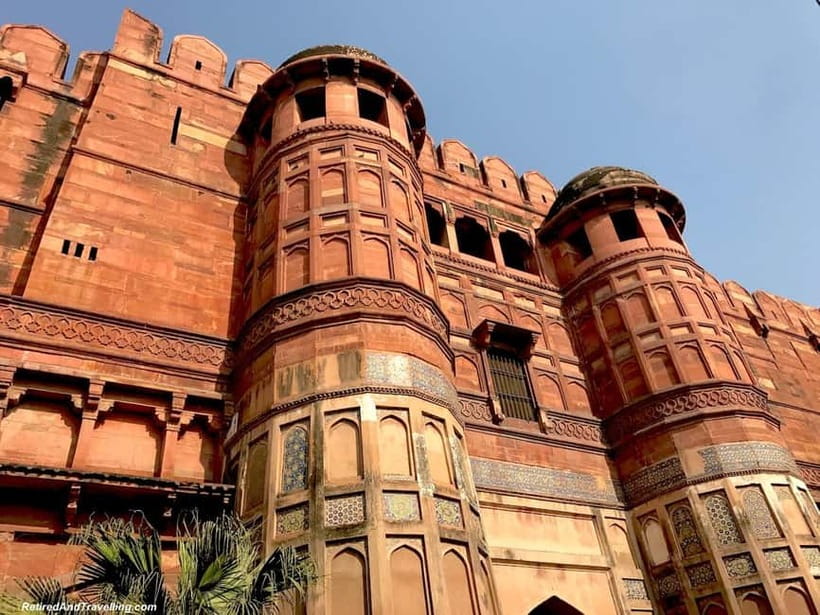
I also really like the focused Agra Fort stop, where guides like Muzakkir (and sometimes Abdul or Ankit) explain what you’re looking at—palaces, mosques, and courtyards—without drowning you in a textbook mood.
The main thing to weigh is time and movement: it’s about 11 hours, there’s a fair amount of walking, and the monument entrance fees are not included.
In This Review
- Key things I’d plan around
- A pre-dawn Agra day tour that doesn’t waste your best light
- Rauza-i Munawwara at sunrise: what changes, and why it matters
- Breakfast with a view: fuel for fort walking (not just a break)
- Agra Fort with a guide: palaces, mosques, and the stories behind the stones
- The 11-hour schedule: how to make it feel smooth
- Skip-the-line access and what’s still extra
- Comfort, what to pack, and the walking reality
- Price and value: why $28 can work (if you plan for entrance fees)
- Languages and guides: how to pick the right fit
- After the monuments: what you can do with your free time
- Should you book this sunrise Agra day tour?
- FAQ
- What are the pickup options for this tour?
- How long is the tour?
- How much does the tour cost?
- Are entrance fees included for Rauza-i Munawwara and Agra Fort?
- Is breakfast included?
- What’s included in the price besides the guided tours?
- Which languages are the guides available in?
- Can I use flash photography inside Rauza-i Munawwara?
- Are food and drinks allowed inside the monument?
- What types of travelers should avoid this tour?
Key things I’d plan around
- Pre-dawn start from Delhi-area pickup points with a comfortable air-conditioned transfer both ways
- Rauza-i Munawwara sunrise timing aimed at the best light, plus rules around flash photography
- Skip-the-ticket-line experience, but remember entrance fees are extra
- A guided Agra Fort circuit through palaces, mosques, and courtyards with clear historical context
- Breakfast + photo time + a bit of shopping, so the day feels full but not chaotic
More dawn starts at the Taj Mahal
A pre-dawn Agra day tour that doesn’t waste your best light

This is the kind of Agra day trip you pick when you care about sunrise, not just ticking boxes. You’ll start early from Delhi-area pickup points (including New Delhi Aerocity), ride about 3.5 hours to Agra, and then spend your morning where the light matters.
Because it’s a private group, the pace tends to be more controlled. You’re not stuck with a big, slow-moving group, and your guide can steer you to the right moments for photos.
One practical note: you’ll be up early and out for most of the day, so plan for real downtime later. If you’re the type who loves a long, active day, you’ll be happy here. If you’re not, you might want to keep your expectations realistic about fatigue.
Rauza-i Munawwara at sunrise: what changes, and why it matters
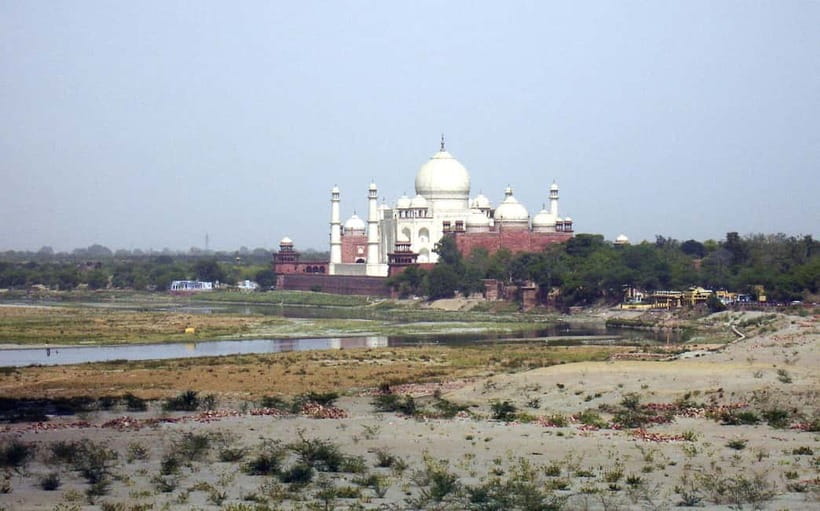
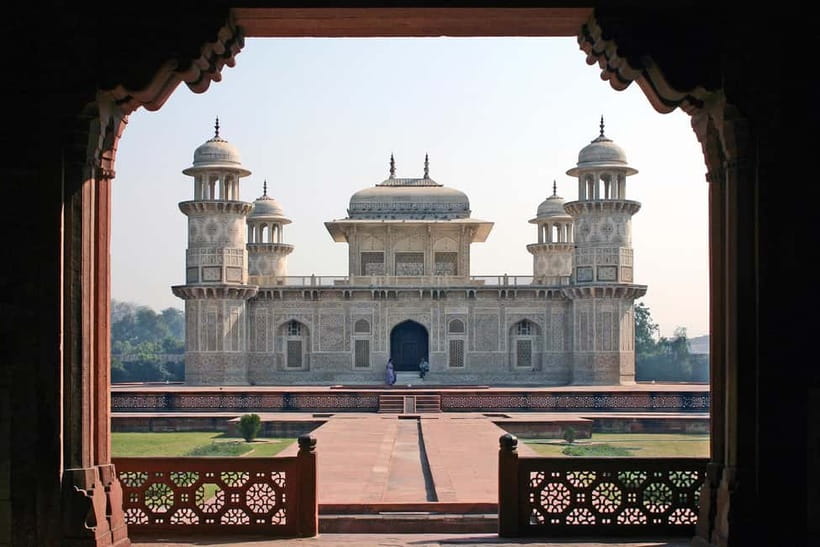
The heart of this tour is Rauza-i Munawwara at sunrise. You’ll arrive early, before the crowds fully form, and watch the white marble shift with the colors of the sky. That “color change” effect is exactly what makes sunrise photography in Agra so addictive.
Your guide will explain the architecture and history so you’re not just pointing your camera and hoping. The goal isn’t to overwhelm you—it’s to help you understand what you’re seeing as the light rolls across the structure.
Photo rules are important. Flash photography is not allowed inside Rauza-i Munawwara, and food and drinks aren’t allowed inside the monument. That means you’ll want your camera ready, your stamina good, and your snacks handled before or after—this tour builds in a breakfast stop for that reason.
From the guide angle, I’d also expect some timing know-how. In past experiences with guides like Hussain, the morning approach has helped people get Taj photos with fewer distractions in the background. Just keep in mind: crowds can’t be fully controlled, but the early timing and local guidance make a difference.
Breakfast with a view: fuel for fort walking (not just a break)
After sunrise and photos, you’ll have breakfast at a nearby hotel or a picturesque location with a view of Rauza-i Munawwara. This is more than a snack stop. It’s a smart setup for the day ahead, because Agra Fort involves walking through multiple sections—palaces, mosques, and courtyards.
Timing matters here. If breakfast is too rushed, people end up cranky during the fort portion. If it’s too late, you lose time for exploring and shopping. This tour gives you a solid breakfast window (about two hours), which helps keep the day comfortable.
Also, remember that food and drinks aren’t allowed inside the monument area you just visited. So if you’re the type who forgets basics, make breakfast the moment you slow down, hydrate, and reset.
Agra Fort with a guide: palaces, mosques, and the stories behind the stones
Next comes Agra Fort, another UNESCO World Heritage site. You’ll explore it with a guide for about 1.5 hours, moving through the palaces, mosques, and courtyards.
What makes this stop worth doing with a guide is simple: Agra Fort is complex. Without context, it can start to feel like “more buildings.” With a guide, it becomes readable—Mughal emperors, the fort’s role in the Mughal Empire, and why these spaces were designed the way they were.
The best part of this portion is how you’re not just hearing names and dates. You’re seeing how different parts of the fort connect to power, daily life, and ceremony. When a guide is effective—like Muzakkir has been praised for being both helpful and informative—you finish the fort walk with a sense of where to look and what details matter.
You’ll have some shorter break time back in Agra later (about 30 minutes), which is useful if you need a quick coffee or just a breather.
- Agra: Skip-the-Line Taj Mahal & Agra Fort Private Tour★ 4.9 · 1,546 reviews
- Agra: Taj Mahal Express Entry Tickets★ 4.8 · 684 reviews
- Agra: Taj Mahal and Mausoleum Guided Tour with Skip-the-Line★ 4.8 · 631 reviews
- Agra: Taj Mahal & Mausoleum Skip-the-Line Tour with Options★ 4.9 · 456 reviews
- Private Guided Tour of Agra★ 5.0 · 420 reviews
The 11-hour schedule: how to make it feel smooth
This tour runs around 11 hours total, and the rhythm is built around one key idea: get the sunrise window first, then fill the rest of the day with strong, guided stops.
Your transfer is roughly 3.5 hours each way from Delhi to Agra. That’s a long car day, but it’s part of the deal if you want sunrise. The good news is the vehicle is air-conditioned, and the tour includes bottled water.
The day also includes time for souvenir shopping. That’s not “extra fluff” if you plan for it. It’s a chance to pick up local crafts without adding another separate errand later.
If you hate structured days, the schedule might feel “packed.” If you like a clear plan—early start, guided monuments, then flexible time afterward—you’ll appreciate the balance.
A final timing perk: after Agra Fort, you get free time and shopping (about two hours). That helps you breathe, explore local streets on your own, or just take it easy and avoid overcommitting.
Skip-the-line access and what’s still extra
This tour includes skip-the-ticket-line. That’s a big deal at major sites, because it reduces waiting and helps you stay on schedule—especially during a morning itinerary when light fades fast.
Just be aware: entrance fees to Rauza-i Munawwara and Agra Fort are not included in the tour price. So when you’re budgeting, treat that $28 per person as the cost of transportation + guiding + the day’s structure, not as a full “everything included” package.
You should also expect to pay for personal snacks or extras separately. Alcohol and drugs aren’t allowed, and the monument rules mean you won’t be buying food inside while you’re touring.
Comfort, what to pack, and the walking reality
Wear comfortable shoes. That’s not optional on an Agra day that includes two major monument areas. Even with guidance and breaks, you’ll still be on your feet for stretches.
Bring a camera—sunrise here is the main event. And bring water. Bottled water is included during the tour, but carrying extra water can make you feel more in control, especially if you get hot from morning movement.
The tour isn’t listed as suitable for wheelchair users or for people with back problems. That’s mainly about walking and the nature of monument areas. If you have mobility constraints, it’s worth thinking twice before booking.
One more small but important rule: flash photography is not allowed inside Rauza-i Munawwara. If you’re used to taking lots of night-style or low-light shots with flash, adjust your habit in advance.
Price and value: why $28 can work (if you plan for entrance fees)
At about $28 per person for an 11-hour private day tour, the value is in the combo: round-trip transportation from Delhi-area pickup points, a professional guide, bottled water, skip-the-ticket-line, and the guided focus on both Rauza-i Munawwara and Agra Fort.
What makes this feel like good value is that you’re not trying to stitch the day together yourself. You’re paying for a planned route, a guide who explains what you’re seeing, and enough structure to hit sunrise properly rather than improvising.
The trade-off is that entrance fees are extra. Since those aren’t included, you should calculate the total cost based on what the sites require on the day you go. Once you do that, this price can still look very reasonable compared with booking separate transport and guides.
Languages and guides: how to pick the right fit
The guide can be English, German, Spanish, or French. If you prefer a specific language, check availability before locking in. A guided sunrise and a guided fort visit are much more satisfying when you can follow the explanations clearly.
Guide quality matters a lot on tours like this. Past experiences have highlighted friendly, professional guides, and names like Hussain, Muzakkir, Abdul, and Ankit show up in how people describe the day. Even if the guide you get is different, the format is built around explanation and pacing—not just a driver dropping you at the gates.
If you want a day that feels calm rather than chaotic, that’s usually a sign you’ll be happy with this tour style.
After the monuments: what you can do with your free time
Once the guided stops are done, you get free time for shopping and local exploring. That’s a good moment to do things at your pace: browse markets, pick up souvenirs, or simply slow down after a big morning.
You also have an option after the tour to return to your hotel for rest or keep exploring on your own. Then you’ll head back to Delhi with drop-off options at Aerocity or New Delhi.
If you’re trying to keep your schedule light, use the free time for something restorative—tea, a walk, or a sit-down meal—because the morning start will catch up with you.
Should you book this sunrise Agra day tour?
Book it if you want sunrise photos with guidance, a structured day that doesn’t waste time, and a guided Agra Fort visit that turns buildings into stories. The $28 price makes sense when you’re factoring in private guiding and transportation, as long as you budget for monument entrance fees separately.
Skip it—or at least think hard—if you’re sensitive to early mornings, don’t like long car rides, or have mobility or back issues. Also, if you’re the kind of traveler who hates any rules around photo-taking or food inside monument areas, remember flash isn’t allowed and food/drinks aren’t allowed inside.
If you can handle the early start and you care about doing Agra Fort and the sunrise moment well, this is one of the more practical ways to plan your day from Delhi.
FAQ
What are the pickup options for this tour?
Pickup is available from New Delhi Aerocity, and it also lists pickup included from Gurugram, Greater Noida, Noida, Ghaziabad, Faridabad, and New Delhi areas.
How long is the tour?
The duration is 11 hours.
How much does the tour cost?
The price is listed as $28 per person.
Are entrance fees included for Rauza-i Munawwara and Agra Fort?
No. Entrance fees to Rauza-i Munawwara and Agra Fort are not included in the tour price.
Is breakfast included?
Yes. You get breakfast at a nearby hotel or a picturesque location with a view of Rauza-i Munawwara.
What’s included in the price besides the guided tours?
Round-trip transportation in an air-conditioned vehicle, a professional live guide, skip-the-ticket-line, bottled water, time for souvenir shopping, and the planned sightseeing segments.
Which languages are the guides available in?
Live guides are available in English, German, Spanish, and French.
Can I use flash photography inside Rauza-i Munawwara?
No. Flash photography is not allowed inside Rauza-i Munawwara.
Are food and drinks allowed inside the monument?
No. Food and drinks are not allowed inside the monument.
What types of travelers should avoid this tour?
It’s not suitable for people with back problems or for wheelchair users, based on the walking involved and monument conditions.
More Tours in Agra
- Agra: Skip-the-Line Taj Mahal & Agra Fort Private Tour
★ 4.9 · 1,546 reviews - Agra: Taj Mahal and Mausoleum Guided Tour with Skip-the-Line
★ 4.8 · 631 reviews - Agra: Taj Mahal & Mausoleum Skip-the-Line Tour with Options
★ 4.9 · 456 reviews - Private Guided Tour of Agra
★ 5.0 · 420 reviews - Taj Mahal, Agra Fort, Baby Taj & Mehtab Bagh Private City Tour
★ 5.0 · 391 reviews
More Tour Reviews in Agra
- Agra: Skip-the-Line Taj Mahal & Agra Fort Private Tour
★ 4.9 · 1,546 reviews - Agra: Taj Mahal Express Entry Tickets
★ 4.8 · 684 reviews - Agra: Taj Mahal and Mausoleum Guided Tour with Skip-the-Line
★ 4.8 · 631 reviews - Agra: Taj Mahal & Mausoleum Skip-the-Line Tour with Options
★ 4.9 · 456 reviews - Private Guided Tour of Agra
★ 5.0 · 420 reviews
More Sunrise Runs at the Taj
- Agra : Private Sunrise Taj Mahal & Agra City Tour
★ 5.0 · 367 reviews - Taj Mahal Sunrise & Sunset All Inclusive Private Luxury Agra Tour
★ 5.0 · 348 reviews - Taj Mahal Sunrise Tour
★ 5.0 · 306 reviews - Private Taj Mahal Sunrise and Agra Fort Skip the Line Tour
★ 5.0 · 156 reviews - All-Inclusive Private Sunrise Taj Mahal & Agra City Tour
★ 5.0 · 139 reviews
Just Reviewed: The Latest Agra Tours









Taj Mahal Sunrise Tours, compared.
 ★ 5.0Private Sunrise Taj Mahal & Agra City TourFrom $180367 reviews
 ★ 5.0Taj Mahal Sunrise & Sunset All Inclusive Private Luxury Agra TourFrom $99348 reviews
 ★ 5.0Taj Mahal Sunrise TourFrom $20306 reviews
 ★ 5.0Private Taj Mahal Sunrise and Agra Fort Skip the Line TourFrom $4156 reviews
 ★ 5.0All-Inclusive Private Sunrise Taj Mahal & Agra City TourFrom $133139 reviews
 ★ 5.0From Delhi : Taj Mahal Sunrise & Agra Car Tour with 5* BreakfastFrom $65118 reviews
 ★ 5.0Private Skip The Line Taj Mahal Sunrise Tour – Ticket & GuideFrom $2470 reviews
 ★ 5.0Taj Mahal Express Entry Ticket – Sunrise & Daytime OptionsFrom $266 reviews
Browse the lists this tour appears in