
Reviewed · AGRA CITY SIGHTSEEING TOURS
Agra, The City through Poetry
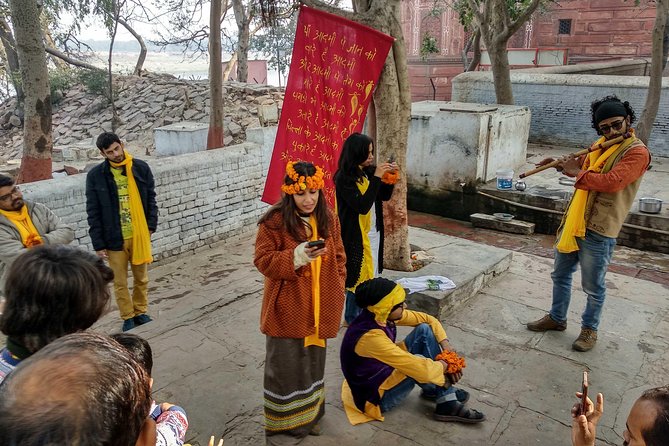
Agra reads like poetry if you know to look. This private walk connects Agra’s old lanes with Ghalib and Nazir Akbarabadi, so you see the city beyond the Taj. I love the way your guide frames the Urdu poetry world of the late Mughal period, not just names on a map.
Plan for a moderate physical fitness level, since you are walking through older streets for about 2–3 hours. It also requires good weather, with a reschedule or refund if conditions are poor.
In This Review
- Key points worth knowing before you go
- Why this Agra poetry walk beats the usual checklist
- Start at Jama Masjid: the route that sets the mood
- Mirza Ghalib’s birthplace: when Urdu poetry gets grounded
- Calligraphy workshop: why the script is part of the story
- The 16th-century shopping street: silk-route money and Nazir Akbarabadi
- Khankhana Katra: poet-prince ideas in a real city corner
- The guide experience: where the tour really earns its 4.9
- Your take-home handout: poetry you can revisit
- Pace, timing, and how to plan your evening
- Price and value: what $44.28 buys you here
- Who this poetry walk is best for
- Should you book Agra, The City through Poetry?
- FAQ
- Where does the tour start?
- What time does the walk begin?
- How long is the experience?
- Is this a private tour?
- What ticket do I receive?
- Is the tour near public transportation?
- What should I know about physical demands?
- Does the tour run in any weather?
- What places or activities are included?
- Is there a handout included?
- How does cancellation work?
Key points worth knowing before you go
- Jama Masjid is the launch point, grounding the walk in an active, historic part of Agra
- You follow a poet-to-place route, tying Urdu writers to specific locations you can actually stand in
- A calligraphy workshop helps you connect the Urdu script to Mughal-era language and literature
- You walk a 16th-century shopping stretch that once fed the silk route economy
- You get a take-home handout with curated poetry verses and photographs
- It is private, so you can ask questions and set your pace without being rushed
Deeper into the old lanes of Agra
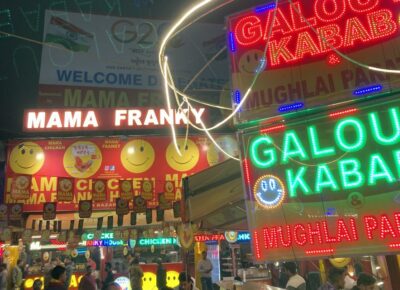
Why this Agra poetry walk beats the usual checklist
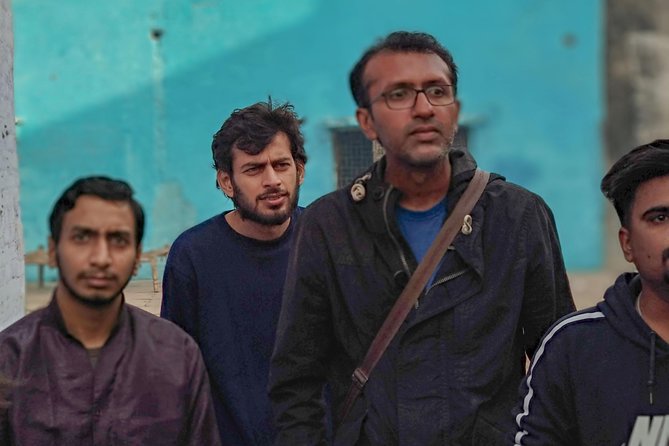
If Agra feels like it is all about one monument, this tour gives you the other half of the city. The idea is simple: instead of treating poets as distant figures, you meet their stories through the streets and sites where their words made cultural sense.
I like that the walk leans into Urdu poetry and the late Mughal period rather than turning poetry into a museum label. You also get a practical kind of culture: you learn what was happening in society and language, and then you see how that shows up in everyday spaces—markets, workshops, and historic religious landmarks.
The price, at $44.28 per person, is also easier to justify when you think about what you get for the time. Two to three hours plus a guided explanation plus a handout with verses and photos plus a calligraphy stop is a lot more than a standard photo-only walk.
Start at Jama Masjid: the route that sets the mood
Your walk starts at Jama Masjid in Agra’s Subash Bazar / Kinari Bazar area, and it ends back at the same meeting point. Meeting at this mosque matters because it places you in a living historic neighborhood from minute one, not beside a fenced-off landmark.
You begin at 5:00 pm, so you are usually walking in the part of the day when people are out and about. The exact vibe depends on the day, but the route is designed to move you through older lanes and sites where Agra still feels like it has residents, routines, and community stories—not just visitors.
One more practical note: the meeting area is near public transportation, which makes it easier to stitch this into a broader Agra plan without stressing over last-mile logistics.
Mirza Ghalib’s birthplace: when Urdu poetry gets grounded
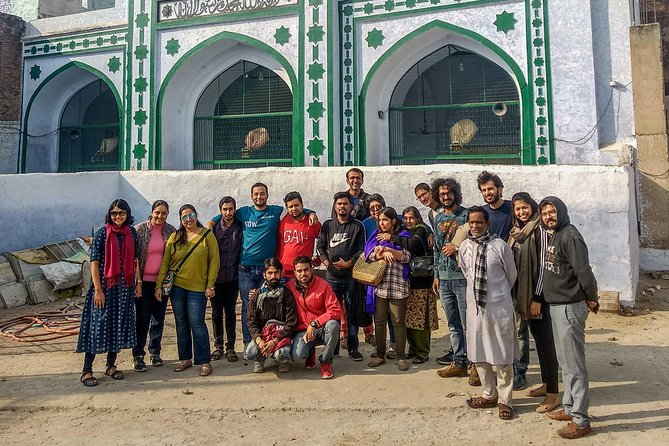
A major highlight is the stop at Mirza Ghalib’s Birthplace. The guide connects Ghalib to his writing genre and to the emergence of Urdu poetry during the late Mughal period. That phrasing is important. This is not just biography trivia. It is the cultural moment—how Urdu poetry rose in a changing Mughal world—made human by pointing to a real place.
Standing in a birthplace gives you a different kind of understanding than reading a timeline. You start thinking about how language travels: through teachers, patrons, daily talk, and printed or copied verses. That is what this stop is aiming for: place-based storytelling that helps Urdu poetry feel like a living craft rather than a school unit.
If you like arts-and-language explanations (and not only monument history), this is the moment where the tour clicks.
Calligraphy workshop: why the script is part of the story
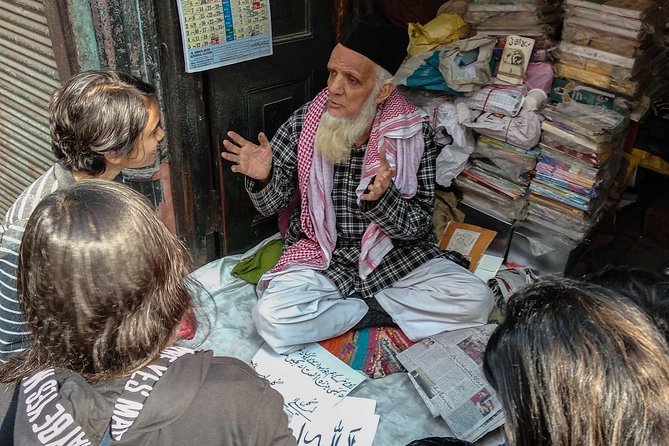
From Ghalib you move into a calligraphy workshop. Urdu is known for its distinctive calligraphic style, and this stop focuses on how the language and its literature developed during Mughal rule.
This is one of those stops that can feel optional on other tours, but here it makes sense. Poetry is not only about meaning—it is about form. When you see how the script is shaped, you start realizing why calligraphy mattered culturally in Mughal India: it was one way of preserving ideas, showing status, and making language visible as art.
You also get a simple mental tool for the rest of the walk. As the guide brings up verses later, you will be able to think of the poetry as something written, copied, and displayed—not just recited.
See the whole of Agra in a day
- Private Guided Tour of Agra★ 5.0 · 420 reviews
- Taj Mahal, Agra Fort, Baby Taj & Mehtab Bagh Private City Tour★ 5.0 · 391 reviews
- Agra : Private Sunrise Taj Mahal & Agra City Tour★ 5.0 · 367 reviews
- Private Agra Local Sightseeing Tour★ 5.0 · 199 reviews
- All-Inclusive Private Sunrise Taj Mahal & Agra City Tour★ 5.0 · 139 reviews
The 16th-century shopping street: silk-route money and Nazir Akbarabadi
Next, you walk down a 16th-century shopping street that once played a part in the silk route. The tour uses this setting to talk about the city’s social and economic details—how trade shaped neighborhoods, habits, and the kinds of stories people wanted to hear.
This is where Nazir Akbarabadi enters clearly. You read a couple of verses linked to his documenting of the city’s socio-economical life. That choice is clever. It turns a market street from a generic sightseeing street into a specific historical environment with a voice.
If you have ever wished a history guide would talk less about dynasties and more about daily life, this is that segment. You start noticing how commerce and culture move together. Even if you do not know Urdu, the guide’s framing helps you connect the verse themes to what you can actually see around you.
Practical tip: wear comfortable shoes. This is a walking route through older streets, and you want your feet to be on your side during the quieter, observational sections.
Khankhana Katra: poet-prince ideas in a real city corner
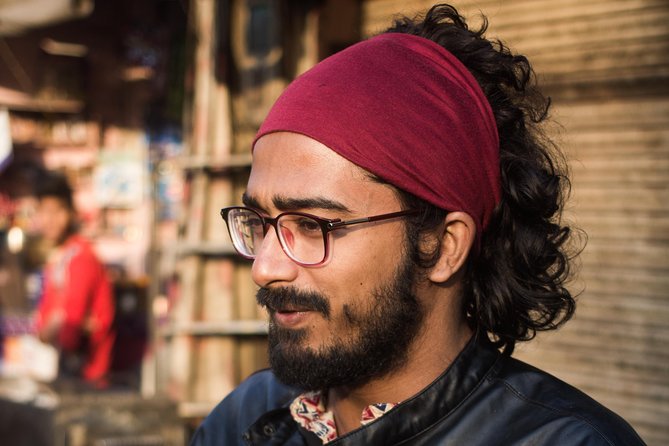
The walk continues to Khankhana Katra, tied to Abdur Rahim Khankhana. The tour uses this stop to keep expanding the poet map around Agra’s old city spaces.
What I appreciate here is that the tour does not treat poetry as a single line of development. You get a sense of how poets and patrons moved through different roles—writers, cultural figures, and people embedded in the social fabric. A stop like Khankhana Katra helps you feel the city as a network, not a sequence of random checkpoints.
One thing to expect: the exact depth of the poetry reading at this point depends on your guide’s flow and your questions. Since it is private, you can nudge the conversation toward the parts that interest you most—whether that is language history, the Mughal period, or how different poets shaped Urdu poetry.
The guide experience: where the tour really earns its 4.9
The most praised part of this experience is the guide style—especially the way the storytelling stays connected to the city and not just the textbook version of it.
On this walk, guides have a reputation for being super authentic and genuinely invested in Agra’s people and culture. One guide mentioned by name is Kaleem, and the key detail isn’t just enthusiasm. It is the way he ties each stop back to the poetry thread and offers historical context across different religions and neighborhood types.
For you, that matters because a poetry tour lives or dies by interpretation. Knowing a poet name is fine. Understanding why a poet matters in this exact place is better. A strong guide keeps that link tight: site first, then verse, then context, then meaning again.
You also get a private format, meaning you can ask as many questions as you like. If you want more background on Urdu terms, calligraphy, or the Mughal cultural setting, you can steer the conversation. If you want help taking photos at the right moments, you can ask for that too.
Your take-home handout: poetry you can revisit
You do not just walk away with photos. You also get a handout with curated poetry verses and photographs.
This is a big value point because poetry can blur quickly after a tour if you rely only on memory. Having verses in front of you later helps you review what the guide connected to each stop. The photos also make it easier to match the words to the places, especially if Agra moves into a packed schedule and your days start blending.
Think of it like a souvenir that keeps working after you leave.
Pace, timing, and how to plan your evening
This is a 2 to 3 hour private walk, starting at 5:00 pm. That timing is generally practical because it avoids the hottest midday hours while still letting you enjoy street life.
However, plan for it to be a true walking experience rather than a quick drive-by. The route is through old city streets, and the tour requires a moderate physical fitness level. If your feet are sensitive, go for supportive shoes and bring water.
Also remember the weather requirement. The tour depends on good weather, and if it is canceled for poor conditions, you are offered another date or a full refund. That means you should avoid stacking too many tight plans for the same exact day.
Price and value: what $44.28 buys you here
At $44.28 per person, you are paying for a private guide and a more thoughtful route than the standard monument circuit.
Here is how I judge value for this kind of tour:
- You get a thematic route with specific poet-linked stops, not random walking
- You get a calligraphy workshop moment tied to Urdu script and Mughal-era language
- You leave with a handout including verses and photos, so the experience continues after your trip
Compared to a basic guided walk that just points and moves on, this gives you a clearer learning arc. You are not only seeing Agra; you are learning how Agra’s literary culture connected to places and people.
One more practical detail: this experience is often booked around 86 days in advance on average. That is a clue it is popular and has limited scheduling flexibility. If you are traveling during a busy season, it is smarter to lock it in earlier rather than waiting for a last-minute decision.
Who this poetry walk is best for
This tour fits you best if you like one (or more) of these:
- You want Agra beyond the Taj Mahal, with a more local-feeling route
- You enjoy Urdu poetry and want the historical context, not just names
- You like guided interpretation where a story is tied directly to a specific place
- You prefer private pacing and the chance to ask questions
It is also a good fit for people who like culture through craft. The calligraphy stop is not a generic photo stop. It is designed to connect writing style to language development and literature during Mughal rule.
If you want a fast, checklist-style tour with minimal walking and minimal discussion, this may feel too “thinking-oriented.” But if you like conversation and context, you will likely enjoy the way the route keeps returning to poetry.
Should you book Agra, The City through Poetry?
I would book it if you want Agra to feel personal and human. This tour turns streets and historic sites into a reading map, where Urdu poets like Ghalib and Nazir Akbarabadi connect to what you can see. The private format helps, and the calligraphy workshop plus the take-home handout makes it feel like more than a one-time stroll.
Book it especially if you value an excellent guide and you like learning how culture works, not only what happened. Just plan around walking time, moderate fitness, and good weather—and you will get a stronger experience from the first verses to the last photo in your handout.
FAQ
Where does the tour start?
The tour starts at Jama Masjid, in Agra’s Subash Bazar/Kinari Bazar area. The address is listed as Jama Masjid, Subash Bazar, Kinari Bazar, Hing ki Mandi, Mantola, Agra, Uttar Pradesh 282003, India.
What time does the walk begin?
The start time is 5:00 pm.
How long is the experience?
It runs about 2 to 3 hours.
Is this a private tour?
Yes. It is private, so only your group participates.
What ticket do I receive?
You receive a mobile ticket.
Is the tour near public transportation?
Yes, the meeting area is noted as being near public transportation.
What should I know about physical demands?
It requires moderate physical fitness, since it is a walking tour through older parts of the city.
Does the tour run in any weather?
The experience requires good weather. If it is canceled due to poor weather, you will be offered a different date or a full refund.
What places or activities are included?
The walk includes stops such as Jama Masjid, Mirza Ghalib’s Birthplace, a calligraphy workshop, and areas connected with Nazir Akbarabadi and Abdur Rahim Khankhana (Khankhana Katra). You also receive a handout with curated poetry verses and photographs.
Is there a handout included?
Yes. You take home a handout with curated poetry verses and photographs.
How does cancellation work?
Free cancellation is available up to 24 hours before the experience’s start time for a full refund.
If you want, tell me your travel dates and whether you’re also visiting the Taj Mahal the same day. I can suggest a simple timing plan so this poetry walk slots in smoothly.
More Tour Reviews in Agra
- Agra: Skip-the-Line Taj Mahal & Agra Fort Private Tour
★ 4.9 · 1,546 reviews - Agra: Taj Mahal Express Entry Tickets
★ 4.8 · 684 reviews - Agra: Taj Mahal and Mausoleum Guided Tour with Skip-the-Line
★ 4.8 · 631 reviews - Agra: Taj Mahal & Mausoleum Skip-the-Line Tour with Options
★ 4.9 · 456 reviews - Private Guided Tour of Agra
★ 5.0 · 420 reviews
Agra City, In Full
- Private Guided Tour of Agra
★ 5.0 · 420 reviews - Taj Mahal, Agra Fort, Baby Taj & Mehtab Bagh Private City Tour
★ 5.0 · 391 reviews - Agra : Private Sunrise Taj Mahal & Agra City Tour
★ 5.0 · 367 reviews - Private Agra Local Sightseeing Tour
★ 5.0 · 199 reviews - All-Inclusive Private Sunrise Taj Mahal & Agra City Tour
★ 5.0 · 139 reviews
Old Agra on Foot
- Agra Walking Tour
★ 5.0 · 109 reviews - Agra: Street Food Walking Tour, Spice Market, & Tuk-tuk Ride
★ 4.9 · 102 reviews - Agra 101 City Walk
★ 5.0 · 41 reviews - Flavours of Agra Food walk
★ 5.0 · 25 reviews - Agra: Sadar Bazar Food Market Night Walking Tour by Tuk-Tuk
★ 4.9 · 25 reviews
Just Reviewed: The Latest Agra Tours







Agra City Sightseeing Tours, compared.
 ★ 5.0Private Guided Tour of AgraFrom $39420 reviews
 ★ 5.0Taj Mahal, Agra Fort, Baby Taj & Mehtab Bagh Private City TourFrom $24391 reviews
 ★ 5.0Private Sunrise Taj Mahal & Agra City TourFrom $180367 reviews
 ★ 5.0Private Agra Local Sightseeing TourFrom $48199 reviews
 ★ 5.0All-Inclusive Private Sunrise Taj Mahal & Agra City TourFrom $133139 reviews
 ★ 5.0Private Full-Day Sunrise Taj Mahal and Agra City TourFrom $2648 reviews
 ★ 5.0Agra 101 City WalkFrom $4141 reviews
 ★ 5.0Private Agra Local Sightseeing Tour by Car and DriverFrom $1132 reviews
Browse the lists this tour appears in