

Reviewed · AGRA FORT TOURS
Agra Fort: Guided UNESCO Heritage Walking Tour
One hour, and Agra Fort starts speaking. This guided UNESCO walking tour turns a big, confusing warren of rooms into a clear Mughal-era story you can actually follow, and you’ll cover key sights without wasting time. I like the private-group pace, and I love how the guide connects buildings to events as you move.
In particular, the tour’s stop-by-stop focus makes it easier to appreciate major court spaces like Diwan-i-Am and Diwan-i-Khas, not just see them from the outside. Then you reach the emotional parts too: the spots tied to Shah Jahan’s imprisonment by Aurangzeb and the views from Musamman Burj that frame the Taj Mahal in a bittersweet way.
The main drawback is simple: Agra Fort is huge, with uneven surfaces and plenty of walking in real sun, so comfortable shoes matter. Add the entrance bag checks (no large bags), and you’ll want to keep your day light and easy.
In This Review
- Key Things You’ll Notice on This Agra Fort Walk
- Agra Fort in One Hour: Why This Guided Walk Works
- Entering Through Amar Singh Gate and Getting Oriented
- The Court in Stone: Diwan-i-Am, Diwan-i-Khas, and Jahangiri Mahal
- Diwan-i-Am: The public face of power
- Diwan-i-Khas: Private authority and elite ritual
- Jahangiri Mahal: A palace that blends styles
- Shah Jahan’s Imprisonment Story Inside the Fort Walls
- Musamman Burj and the Taj Mahal View That Feels Personal
- Mirrored Palace and Anguri Bagh: Gardens and Sparkle Breaks
- What Makes the Guides Matter (From Gagan to Shahid Khan)
- Price and Time: Why Around $6 Can Be Excellent Value
- Photography, Bags, and Simple Rules That Save You Stress
- Who Should Book This Agra Fort Guided Walk?
- Should You Book This Agra Fort UNESCO Walking Tour?
- FAQ
- How long is the Agra Fort guided UNESCO walking tour?
- What’s the meeting process for the tour guide?
- What languages is the live tour guide available in?
- What’s included in the price?
- Is photography allowed inside Agra Fort?
- Can I visit the Taj Mahal on the same day?
Key Things You’ll Notice on This Agra Fort Walk
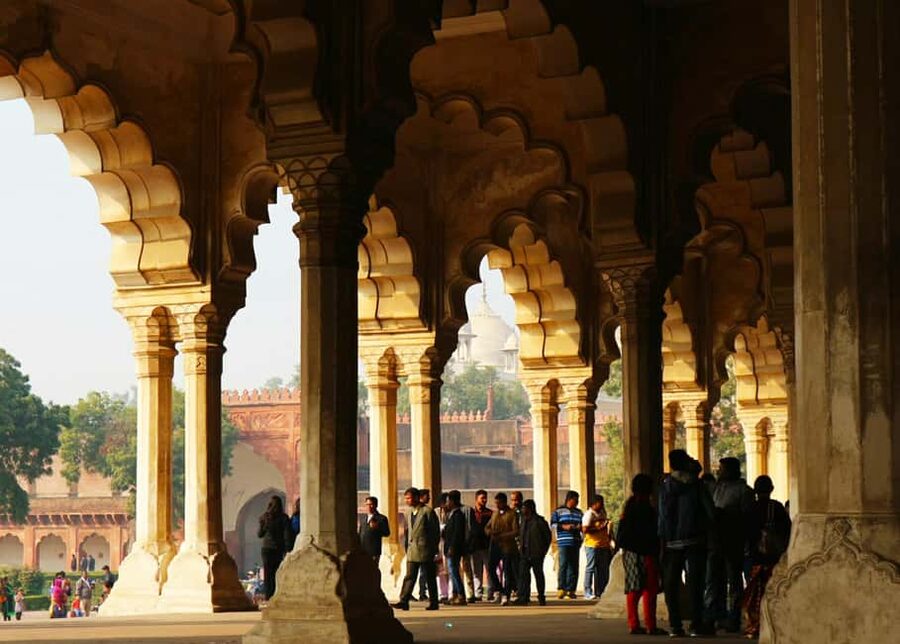
- Start at Amar Singh Gate, the sole visitor entry, so you don’t waste time guessing where to go
- See court spaces in order: Diwan-i-Am, Diwan-i-Khas, and Jahangiri Mahal make the empire feel organized
- Spot the prison story tied to Shah Jahan’s captivity by Aurangzeb
- Visit Musamman Burj, where Shah Jahan spent his final days with the Taj Mahal in view
- Check out the mirrored palace and Anguri Bagh gardens for standout photo stops (access can vary)
- Get guide-led safety and photo guidance at the fort entrance, including help with crowded rush moments
More time inside the red walls of Agra Fort
Agra Fort in One Hour: Why This Guided Walk Works
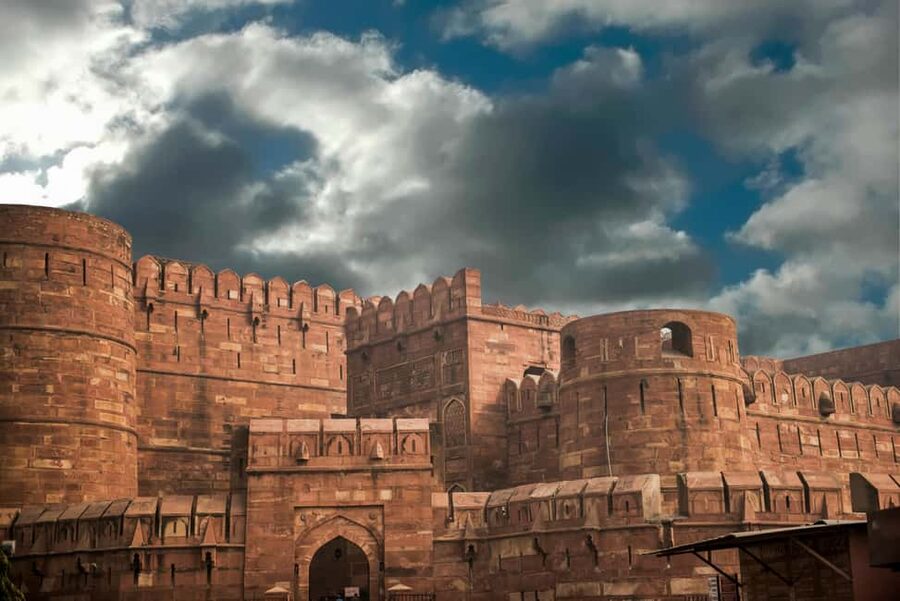
Agra Fort can feel overwhelming fast. You’re looking at massive ramparts, long corridors, and lots of “where do I stand to see the point” moments. A guided walk is the smart answer because you get a path through the main ideas—military stronghold, royal residence, and the human drama behind the walls.
I especially like that this tour is short (about 1 hour). That’s not “I rushed through everything” short; it’s just enough time to cover major highlights and leave you ready for the rest of your Agra day.
The other win is that it’s set up for a private group. Even with a smaller group, the guide can keep things moving and point out details you might otherwise miss—like where to pause for the best sightlines and how to read the architecture without feeling lost.
Entering Through Amar Singh Gate and Getting Oriented
Your walk begins at Amar Singh Gate, the only entrance visitors use. That matters because Agra Fort isn’t designed like a tidy museum. Starting in the right place helps you understand the layout from the start instead of wandering and guessing.
From there, your guide explains the fort’s design as both a fortress and a residence. You’ll hear how Mughal builders balanced defense with comfort: thick structures, controlled access, and spaces that still felt ceremonial and royal.
As you move along ancient ramparts and through grand gates, you’ll get a sense of scale. The fort walls don’t just look old; they show you how control and power were built into everyday movement. It’s one of those places where “stone” turns into “system.”
Practical note: wear shoes that can handle uneven ground. Even if you’re not walking far, the footing can be inconsistent, and you’ll be happier if you don’t have to think about every step.
The Court in Stone: Diwan-i-Am, Diwan-i-Khas, and Jahangiri Mahal
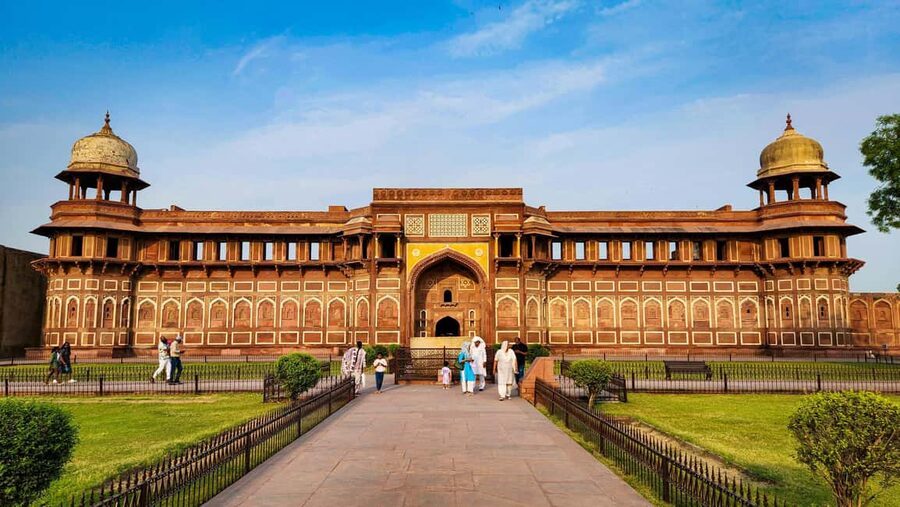
This tour gives you a guided tour of the spaces tied to governance and royal life. The payoff is that each stop helps you picture how ruling worked here—audience, display, decision-making, and performance.
Diwan-i-Am: The public face of power
Diwan-i-Am is where imperial rule looked public. You’ll likely be shown how the hall functioned for audiences and announcements, so it’s not just “a big room.” Your guide helps you connect architectural choices to social purpose.
Deeper into the old lanes of Agra
- Agra Walking Tour★ 5.0 · 109 reviews
- Agra: Street Food Walking Tour, Spice Market, & Tuk-tuk Ride★ 4.9 · 102 reviews
- Agra 101 City Walk★ 5.0 · 41 reviews
- Flavours of Agra Food walk★ 5.0 · 25 reviews
- Agra Fort: Guided UNESCO Heritage Walking Tour★ 4.9 · 21 reviews
Diwan-i-Khas: Private authority and elite ritual
Then comes Diwan-i-Khas, which feels different in spirit. This is about closer, more controlled access—space designed for select circles rather than general audiences. Seeing these two halls back to back gives you a real sense of hierarchy.
Jahangiri Mahal: A palace that blends styles
Next, the Jahangiri Mahal adds another layer: stylistic blending. Expect your guide to point out how Mughal architecture intersects with other influences—so the fort doesn’t feel like one uniform style. It’s more like an empire expressing itself through design.
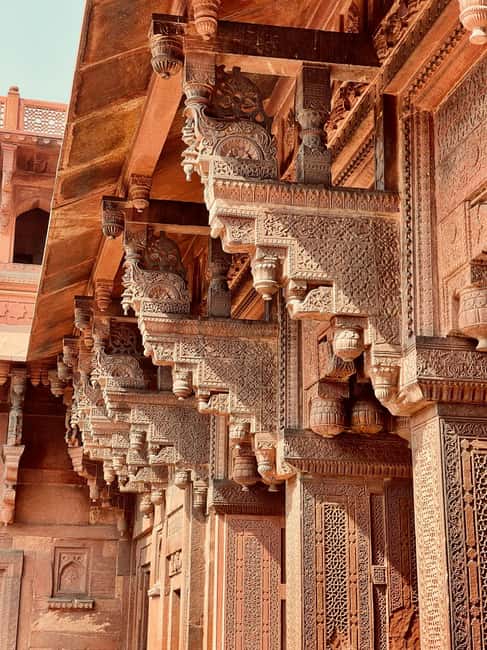
Across these stops, you’ll also see decorative elements that make the walking worth it: Mughal arches, ornate jharokhas (those projecting window-like structures), and intricate marble carvings. If you’re the kind of person who likes to photograph details, you’ll have plenty of chances here.
Shah Jahan’s Imprisonment Story Inside the Fort Walls
One reason Agra Fort hits emotionally is that it’s tied to family conflict at the highest level. You’ll visit the spot connected to Shah Jahan’s imprisonment by his son Aurangzeb. Even if you’re not a hardcore Mughal-history person, the guide’s framing turns that moment into something you can feel.
This is where a guide earns their fee. Without context, it can be easy to treat such sites as just “another room.” With the story explained, you start noticing what the architecture implies: control of movement, surveillance, and the power dynamics that shaped who could go where.
It’s also a reminder that these structures weren’t built just for pageantry. They were built to manage people, and that reality changes how you read every passage you walk through.
Musamman Burj and the Taj Mahal View That Feels Personal
The tour’s most moving stop for many people is Musamman Burj. This is where Shah Jahan spent his final days, with the Taj Mahal visible. The effect isn’t only visual; it’s emotional.
You’ll pause and look out from the fort toward the Taj Mahal. Even if you’ve seen the Taj before, this framing can make it hit differently, because the viewpoint is tied to an ending rather than a victory lap.
If you’re mixing Agra Fort with a Taj Mahal visit (and most people do), think about timing. A guide can help you plan your day so you don’t end up doing everything back-to-back under flat lighting. The tour is short enough that you can still build a satisfying Taj Mahal visit after.
Mirrored Palace and Anguri Bagh: Gardens and Sparkle Breaks
Agra Fort doesn’t just do drama; it also does beauty and play.
If it’s accessible during your visit, you’ll have a chance to see the mirrored palace, where reflections turn the space into something more like a visual instrument than a room. When you stand there, the “why” behind palace design becomes obvious: Mughal rulers wanted their power to feel like light, movement, and illusion.
Then comes Anguri Bagh, the geometric garden area associated with Mughal queens. The gardens are a nice change of pace after halls and ramparts. The layout makes it easier to take photos, and it’s a calmer place to slow down for a minute.
Even in a one-hour tour, these moments matter because they create balance. You get court spaces, prison-and-power story beats, then a shift into gardens and decorative wonder.
What Makes the Guides Matter (From Gagan to Shahid Khan)
A tour like this lives or dies on the guide. The good ones do three things well: they explain clearly, they keep you from getting hassled, and they help you photograph without turning your visit into a stress test.
I really like the examples of guides such as Gagan, who’s known for arriving on time, communicating clearly about meeting points and timing, and even helping with photo spots. If you care about getting good shots without standing in the wrong place, that type of guidance pays off.
Another standout name is Shahid Khan. He’s described as enthusiastic and very active in explaining what you’re looking at and what to notice. He also helped with navigating weekend crowd pressure and getting through queues where permitted, which can make a huge difference at busy times.
What I take from this: don’t just look for someone who can talk about buildings. Look for someone who can manage the human side of the visit too—where to stand, how to stay safe, and how to move through crowds without losing the story.
Price and Time: Why Around $6 Can Be Excellent Value
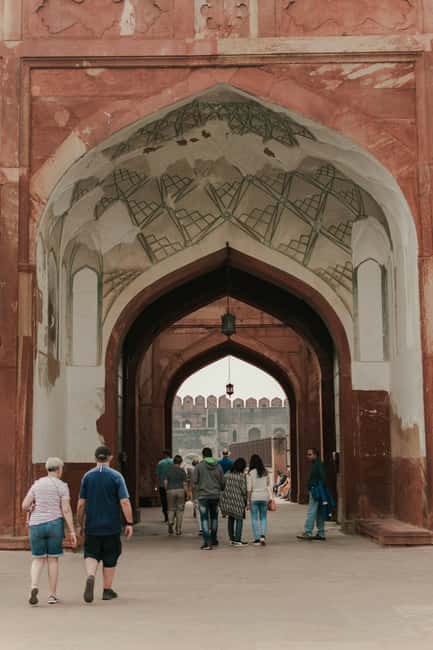
At about $6 per person for roughly 1 hour, this tour is a bargain if you want maximum meaning per minute. You’re paying for orientation and interpretation inside a complex site—not just access to the fort.
Agra Fort’s scale means you can burn time fast if you go alone. Even if you hire an audio guide or rely on signs, you’ll still likely miss the connections: court life sequence, the Shah Jahan imprisonment story, and why Musamman Burj matters. That’s where a guide becomes value, not cost.
Also remember you’re getting a private group setup. For a one-hour structured walk, that usually means you’re not stuck waiting for stragglers or losing attention while someone else asks ten questions.
If you’re traveling on a tight schedule, this is the kind of tour that helps you keep momentum. It pairs cleanly with the Taj Mahal, which is about 2.5 km away, so you can plan a “fort first, Taj second” (or reverse) day without needing transfers included.
Transfers are not included, so factor that into your day plan.
Photography, Bags, and Simple Rules That Save You Stress
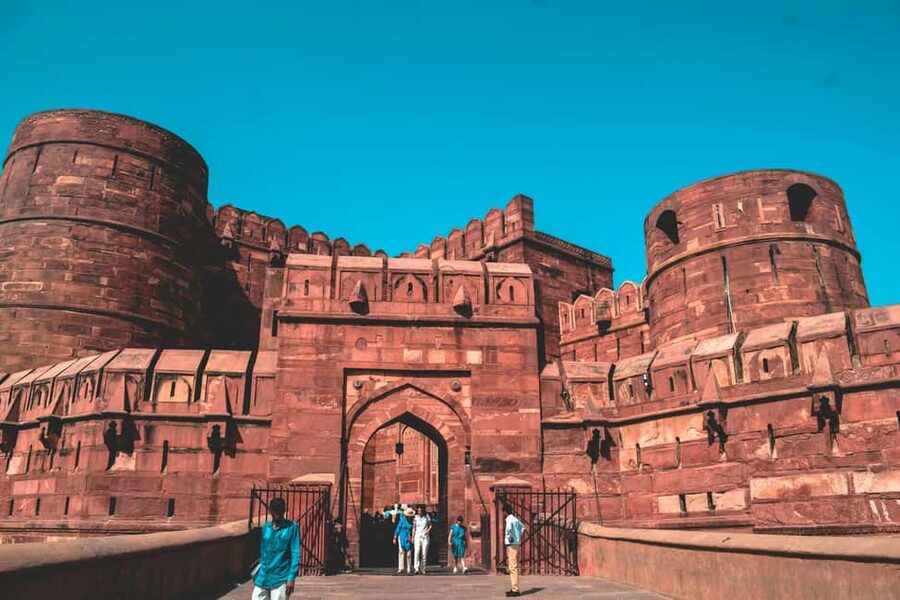
Bring comfortable shoes and a camera. Expect bag checks at the entrance. Keep your bag small, because large bags and prohibited items won’t be welcome.
Photography is allowed, but drones and tripods are usually prohibited without special permission. If you bring photo gear, don’t assume it will be treated like a normal sightseeing request. Keep it simple and follow the on-site rules.
One more practical tip: protect your time at the entrance. The right guide will help you avoid being pulled into pointless distractions by vendors or intrusive photographers. That kind of calm leadership makes your photos better and your visit more peaceful.
Who Should Book This Agra Fort Guided Walk?
Book it if you want an organized, high-impact way to see Agra Fort without spending hours figuring out the story. This suits people who like history but don’t want a lecture that runs longer than their legs can handle.
It’s also a strong choice if you’re pairing Agra Fort with the Taj Mahal in the same day. The tour’s short duration means you can keep the rest of your schedule flexible.
Consider skipping (or at least thinking twice) if you’re hoping for a slow, wander-at-will exploration with long stops everywhere. With a one-hour format, you’ll get the main beats and photo moments, but you won’t have time for every corner at your own pace.
Should You Book This Agra Fort UNESCO Walking Tour?
Yes—if you want value and meaning per minute. For around $6, you’re paying for a guided path through the fort’s key political and emotional landmarks: Diwan-i-Am, Diwan-i-Khas, Jahangiri Mahal, the imprisonment story tied to Aurangzeb, and Musamman Burj’s Taj Mahal view. That’s a lot of “why this place matters” for a short visit.
If you do one Agra Fort thing, do this—then use the rest of your day to explore at your own speed. Your best strategy is simple: plan comfortable shoes, keep your bag light, and treat the guide as your shortcut through the fort’s complexity.
FAQ
How long is the Agra Fort guided UNESCO walking tour?
It lasts about 1 hour, so you can fit it into an Agra day without stretching your schedule.
What’s the meeting process for the tour guide?
You’ll receive the guide’s contact details via WhatsApp (or email if you don’t use WhatsApp) one day before the tour. The local service provider’s WhatsApp number is also listed on your booking voucher.
What languages is the live tour guide available in?
The live guide is available in English and Hindi.
What’s included in the price?
The tour includes a guided tour of Agra Fort. Transfers are not included.
Is photography allowed inside Agra Fort?
Photography is allowed, but drones and tripods are usually prohibited without special permission.
Can I visit the Taj Mahal on the same day?
Yes. The Taj Mahal is about 2.5 km away, so you can plan to visit both in the same day.
More Tour Reviews in Agra
- Agra: Skip-the-Line Taj Mahal & Agra Fort Private Tour
★ 4.9 · 1,546 reviews - Agra: Taj Mahal Express Entry Tickets
★ 4.8 · 684 reviews - Agra: Taj Mahal and Mausoleum Guided Tour with Skip-the-Line
★ 4.8 · 631 reviews - Agra: Taj Mahal & Mausoleum Skip-the-Line Tour with Options
★ 4.9 · 456 reviews - Private Guided Tour of Agra
★ 5.0 · 420 reviews
Old Agra on Foot
- Agra Walking Tour
★ 5.0 · 109 reviews - Agra: Street Food Walking Tour, Spice Market, & Tuk-tuk Ride
★ 4.9 · 102 reviews - Agra 101 City Walk
★ 5.0 · 41 reviews - Flavours of Agra Food walk
★ 5.0 · 25 reviews - Agra: Sadar Bazar Food Market Night Walking Tour by Tuk-Tuk
★ 4.9 · 25 reviews
More of Agra Fort
- Agra: Skip-the-Line Taj Mahal & Agra Fort Private Tour
★ 4.9 · 1,546 reviews - Taj Mahal, Agra Fort, Baby Taj & Mehtab Bagh Private City Tour
★ 5.0 · 391 reviews - Skip-the-Line Guided Taj Mahal & Agra Fort Tour with Add-ons
★ 5.0 · 339 reviews - Skip the line with Private Tour Guide for Taj Mahal & Agra Fort
★ 5.0 · 236 reviews - Agra: Premier Tour of Taj Mahal & Agra Fort All Inclusive
★ 4.7 · 173 reviews
Just Reviewed: The Latest Agra Tours










Agra Fort Tours, compared.
 ★ 4.9Skip-the-Line Taj Mahal & Agra Fort Private TourFrom $71,546 reviews
 ★ 5.0Taj Mahal, Agra Fort, Baby Taj & Mehtab Bagh Private City TourFrom $24391 reviews
 ★ 5.0Skip-the-Line Guided Taj Mahal & Agra Fort Tour with Add-onsFrom $5339 reviews
 ★ 5.0Skip the line with Private Tour Guide for Taj Mahal & Agra FortFrom $15236 reviews
 ★ 4.7Premier Tour of Taj Mahal & Agra Fort All InclusiveFrom $10173 reviews
 ★ 5.0Private Taj Mahal Sunrise and Agra Fort Skip the Line TourFrom $4156 reviews
 ★ 4.9Same Day Taj Mahal, Agra Fort & Baby Taj Tour from JaipurFrom $70129 reviews
★ 5.0Skip-the-Line Taj Mahal & Agra Fort Private TourFrom $5124 reviews
★ 4.9Same Day Taj Mahal, Agra Fort & Baby Taj Tour from JaipurFrom $70129 reviews
★ 5.0Skip-the-Line Taj Mahal & Agra Fort Private TourFrom $5124 reviews
Browse the lists this tour appears in