
Reviewed · AGRA HERITAGE & OLD CITY WALKS
Agra Heritage Walk with Food Tour
Agra tastes like a history lesson. This Agra Heritage Walk with Food Tour pairs Old Town landmarks with real local snacks, so you’re learning the city while you eat your way through the lanes behind Jama Masjid. I love how the focus stays off the usual checklist and instead zeroes in on how Agra works day to day—markets, crafts, and everyday North Indian sweets.
What really makes it work is the human scale. I also like the private guide approach, which helps a lot if you feel uneasy walking crowded bazaars on your own. In guest feedback for this tour, guides such as Asif and Sahib are described as attentive and patient, which matches the way the route is designed: you move, you stop, you understand, you taste.
One possible drawback: you’ll be on your feet in busy, narrow lanes, and the tour has a short, tight timing window. You’ll want moderate physical fitness and comfy shoes, because standing around for food and weaving through crowds is part of the deal.
In This Review
- Key points to know before you go
- Why this Agra food-and-heritage mix is smarter than a standard sights day
- The route starts at Jama Masjid: the Old Town market in motion
- Shri Mankameshwar Mandir: a short Shiva moment in the middle of the snacks
- Agra Fort Railway Station and the Tripolia Chowk story
- Kinari Bazar: the maze of bazaars behind the mosque
- What you actually eat: street snacks and North Indian sweets on the way
- Pickup, private group, and how logistics affect your comfort
- Price and value: $20 buys context, not just snacks
- Who this tour suits best (and who should think twice)
- Practical tips to get the most from the walk
- Should you book the Agra Heritage Walk with Food Tour?
- FAQ
- How long is the Agra Heritage Walk with Food Tour?
- Where does the tour start?
- Is the tour private?
- What food will I try on this tour?
- Are there admission fees for the stops?
- Is bottled water included?
- Can the tour accommodate dietary requirements?
- Is pickup available?
- What is the cancellation policy?
Key points to know before you go
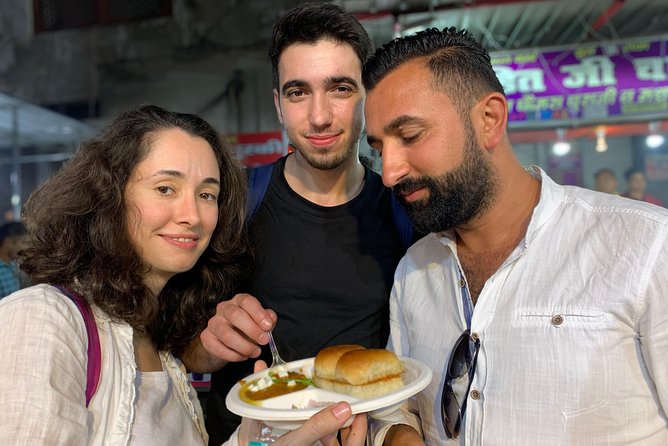
- Street-food sampling with a history lens so the walk feels more meaningful than just eating on the move
- Jama Masjid start in the thick of the Old Market lanes, where shops and food stalls sit side by side
- Short temple stop at Shri Mankameshwar Mandir for a quick cultural pause tied to Lord Shiva
- Agra Fort Railway Station stop with a story about Tripolia Chowk and British-era rail connections
- Kinari Bazar maze of bazaars—different lanes, different wares, and a lot of sensory overload (in a good way)
- Private tour feel for your group, with bottled water included
Deeper into the old lanes of Agra
Why this Agra food-and-heritage mix is smarter than a standard sights day

Agra is famous for one icon, but the city’s real flavor lives in its older neighborhoods. This tour uses that idea in a simple way: you don’t just look at landmarks, you walk the streets that connect them, and you eat the foods that fit the local rhythm.
You’ll get a history-and-food combo that’s hard to replicate on your own. It’s one thing to point at Jama Masjid and read a caption. It’s another to have a local guide explain what those surrounding lanes historically served, then let you taste what people buy and snack on there.
The price also lands in a practical zone. At $20 per person for about 1 to 2 hours, you’re paying for more than food. You’re paying for guidance through crowded markets, context that turns quick stops into stories, and bottled water to keep you moving. If you tried to do this route without a guide, you’d still spend money on food and transport—plus you’d lose the explanations that make the stops click.
The route starts at Jama Masjid: the Old Town market in motion
The walk begins at Jama Masjid (Friday mosque), described as the biggest mosque in Agra. This matters because it puts you right in the thick of Old Town life. Instead of walking into a quiet viewpoint, you enter a zone of narrow lanes where commerce and daily routines overlap.
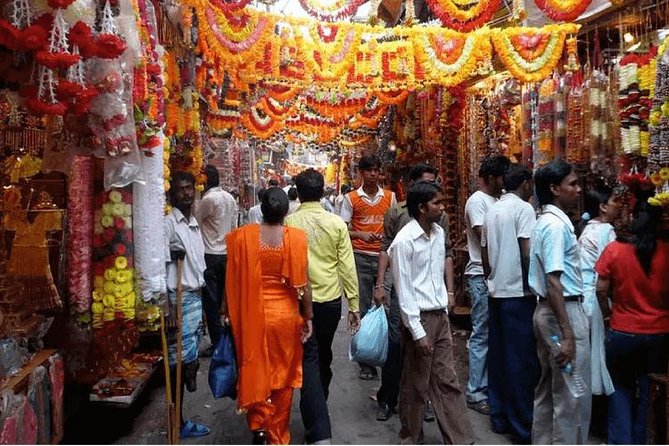
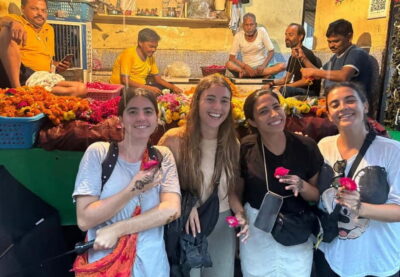
Plan for about 1 hour around this first stop. The lanes surrounding the mosque are lined with colorful shops—spices, jewelry, textiles, cosmetics, sweets, and practical items local people use every day. And yes, there are food stalls right in the mix. So the tour’s “food” part doesn’t feel tacked on. It’s built into the setting.
What I’d watch for here is crowd flow and comfort. These lanes can feel tight, so if you’re sensitive to close quarters, you’ll want to keep your pace steady and stay within your group. It helps to treat this area like a moving market, not a museum—your guide will keep you oriented while you sample.
Good to know: admission is listed as free for this stop, and the route timing is designed to use this area efficiently.
Shri Mankameshwar Mandir: a short Shiva moment in the middle of the snacks
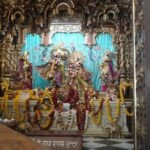
After the market lanes, you get a breather at Shri Mankameshwar Mandir, dedicated to Lord Shiva. The stop is short—about 10 minutes—so you’re not looking at a long sit-down visit. It’s more like a cultural punctuation mark that helps break up the sensory intensity of the bazaar streets.
This is a smart inclusion for a food tour. Without it, the experience can start feeling like only shopping and eating. This temple stop adds a layer of meaning—religious devotion and local tradition—without turning the schedule into a full sightseeing day.
Admission for this stop is also listed as free. If you want photos, go quick and respectful; the point here is to take in the atmosphere and move on.
Agra Fort Railway Station and the Tripolia Chowk story
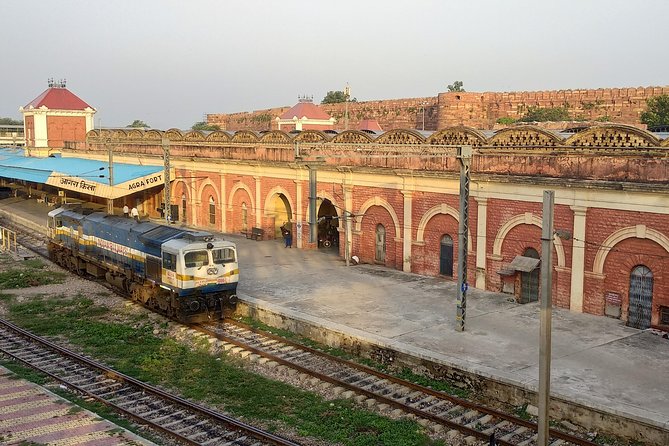
Next comes a stop that’s easy to overlook if you’re only chasing grand monuments. You’ll visit Agra Fort Railway Station, and you’ll also hear the history tied to the spot between the fort and the Friday mosque.
Here’s the kind of detail this tour is built for. Between Agra Fort and the mosque, there was an octagonal Tripolia Chowk, a circle/area connecting the spaces. That Tripolia was destroyed to build the railway station. The station is noted as one of the oldest in India, and it was built by the British to connect Agra with the east part of India.
The stop lasts about 10 minutes, and it works best as a quick reality check: cities change, and infrastructure reshapes old spaces. You’ll look at the station differently after hearing that story, even if you don’t have time to explore the fort itself.
The tour lists admission as free here too, so you’re not paying extra just to get the context.
Still hungry? More Agra kitchens and street plates
- Agra Cooking Classes (Pick up and Drop available)★ 5.0 · 34 reviews
- Agra: Street Food Tour with Spice Market on Tuk-Tuk Ride★ 4.7 · 23 reviews
- Agra: Indian Food Private Cooking Class★ 4.6 · 21 reviews
- Agra: Street Food and Walk Tour with Spice Market by Tuk-Tuk★ 5.0 · 18 reviews
- Story of Spices- A Food Tour of Agra★ 5.0 · 8 reviews
Kinari Bazar: the maze of bazaars behind the mosque
If Jama Masjid is where the story starts, Kinari Bazar is where it really becomes a street experience. This market area is described as dating back to the 16th century, and the vibe is all about narrow lanes and packed shopping.
You’ll spend about 20 minutes here. The route highlights that Kinari Bazar is a maze of crowded lanes bursting with color, and that there are different bazaars within the area—each specializing in different wares. Translation: you’ll see variety fast, and your guide helps you make sense of it without you getting lost.
This is also the best part of the tour for people who like texture and detail. If you enjoy watching how shopkeepers display items, how streets organize by trade, and how people move through the market, you’ll enjoy this stop more than you’d expect.
One practical note: because Kinari Bazar is busy, it helps to keep your phone secure and your valuables close. Stick to your guide’s pacing. You’ll get better results trying to enjoy the flow rather than trying to “win” at navigation.
Admission is again listed as free for this segment.
What you actually eat: street snacks and North Indian sweets on the way
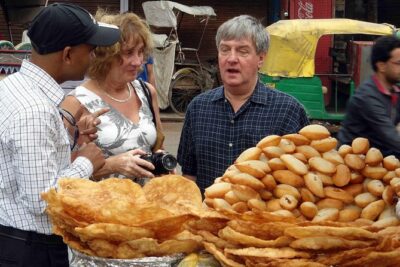
The tour’s food promise is straightforward: you’ll sample street-food snacks and typical North Indian desserts as you walk. You also get bottled water included, which is helpful when you’re sampling multiple bites back-to-back.
Because the exact items aren’t listed in the details provided, I suggest you treat this as a sampler, not a guaranteed full meal. The value is in variety and timing: you eat in the neighborhoods where the foods belong, and you don’t have to plan stops yourself.
Also, you’ll want to share dietary needs when you book. The tour explicitly asks you to advise any specific dietary requirements at the time of booking. If you don’t, the tour may still do its best, but you’re reducing your odds of the safest fit.
Pickup, private group, and how logistics affect your comfort
This tour is designed to feel easy once you arrive. Pickup is offered, you’ll receive a mobile ticket, and it’s a private tour limited to your group.
That combination matters in Agra’s Old Town. Markets are crowded, streets can be narrow, and you’ll get a smoother experience when someone else manages the route and timing. Private also means you can move at the pace your group needs—especially helpful for solo travelers who might otherwise feel tense about wandering into busy lanes.
It’s also described as being near public transportation, which gives you flexibility if you’re already planning to move around the city.
Finally, the tour lists a duration of about 1 to 2 hours, with the schedule broken into short stops. That’s good for staying energized, but it also means you don’t have time to wander off on your own. If you’re the type who likes to linger, plan for the fact that your guide will keep you on track.
Price and value: $20 buys context, not just snacks
At $20 per person, this tour is priced for value—especially because it’s private and includes a local guide with history and culture expertise plus bottled water.
Here’s the real value equation:
- Food sampling in busy markets often costs more when you’re improvising.
- A guide adds cost, but it also adds safety, direction, and explanations that make the stops feel relevant.
- The tour includes free admission for the listed stops, so you’re not paying extra just to visit.
If you’re the type who eats casually and takes photos, you might feel the price is more about guidance than volume. If you’re the type who wants the “why” behind places like Jama Masjid lanes and Tripolia Chowk’s disappearance, the value clicks quickly.
Either way, you’re not being asked for a half-day commitment. You’re buying a focused pocket of Agra that you can layer into a bigger itinerary.
Who this tour suits best (and who should think twice)
This tour is a strong fit if:
- you like street food and you also enjoy learning how cities evolved
- you want an organized way to experience Agra’s Old Town markets
- you’re traveling solo and want less stress in crowds
- you prefer short stops that still feel meaningful
You might think twice if:
- you need a fully seated, low-walking experience (the route is short but street walking is real)
- you’re very sensitive to crowded lanes and noise
- you expect a deep, long temple-style visit for each stop (this is quick cultural context, not long sightseeing)
Practical tips to get the most from the walk
These are the kinds of details that make or break an Old Town food tour.
- Wear comfortable shoes. Even “short” market stops can add up with standing and slow walking.
- Come with an appetite, but don’t push it. You’ll be sampling snacks and sweets across multiple stops, so pace yourself.
- If you have dietary restrictions, mention them at booking. The tour specifically requests this in advance.
- Bring small cash or card if you want extra shopping, but keep the focus on tasting during the scheduled stops.
- Expect strong smells and a lot of movement—treat it like a living market, not a quiet street.
Should you book the Agra Heritage Walk with Food Tour?
I’d book it if you want Agra beyond the headline monument and you like learning while you eat. The route hits high-impact places—Jama Masjid, Kinari Bazar, a Shiva temple pause, and the story-filled stop at Agra Fort Railway Station—all wrapped in a private, time-efficient format.
Skip it if you’re only interested in major sights and you don’t want market walking. Also reconsider if you expect the food to be a full sit-down meal or if crowds make you miserable.
For most people, especially solo travelers who want help navigating busy lanes, this tour feels like a smart, low-commitment way to get a real taste of Agra.
FAQ
How long is the Agra Heritage Walk with Food Tour?
The duration is about 1 to 2 hours.
Where does the tour start?
It starts at Jama Masjid (Friday mosque) in Agra’s old market area.
Is the tour private?
Yes. It’s a private tour/activity, and only your group participates.
What food will I try on this tour?
You’ll sample street-food snacks and typical North Indian desserts during the walk.
Are there admission fees for the stops?
Admission tickets are listed as free for the listed stops: Jama Masjid, Shri Mankameshwar Mandir, Agra Fort Railway Station, and Kinari Bazar.
Is bottled water included?
Yes, bottled water is included.
Can the tour accommodate dietary requirements?
The tour asks you to advise any specific dietary requirements at the time of booking.
Is pickup available?
Pickup is offered, and the tour is described as being near public transportation.
What is the cancellation policy?
Free cancellation is available. You can cancel up to 24 hours in advance for a full refund; within 24 hours, the amount paid is not refunded.
More Tour Reviews in Agra
- Agra: Skip-the-Line Taj Mahal & Agra Fort Private Tour
★ 4.9 · 1,546 reviews - Agra: Taj Mahal Express Entry Tickets
★ 4.8 · 684 reviews - Agra: Taj Mahal and Mausoleum Guided Tour with Skip-the-Line
★ 4.8 · 631 reviews - Agra: Taj Mahal & Mausoleum Skip-the-Line Tour with Options
★ 4.9 · 456 reviews - Private Guided Tour of Agra
★ 5.0 · 420 reviews
Eat Your Way Around Agra
- Agra: Street Food Walking Tour, Spice Market, & Tuk-tuk Ride
★ 4.9 · 102 reviews - Agra Cooking Classes (Pick up and Drop available)
★ 5.0 · 34 reviews - Flavours of Agra Food walk
★ 5.0 · 25 reviews - Agra: Sadar Bazar Food Market Night Walking Tour by Tuk-Tuk
★ 4.9 · 25 reviews - Agra: Street Food Tour with Spice Market on Tuk-Tuk Ride
★ 4.7 · 23 reviews
Old Agra on Foot
- Agra Walking Tour
★ 5.0 · 109 reviews - Agra: Street Food Walking Tour, Spice Market, & Tuk-tuk Ride
★ 4.9 · 102 reviews - Agra 101 City Walk
★ 5.0 · 41 reviews - Flavours of Agra Food walk
★ 5.0 · 25 reviews - Agra: Sadar Bazar Food Market Night Walking Tour by Tuk-Tuk
★ 4.9 · 25 reviews
Just Reviewed: The Latest Agra Tours








Agra Heritage & Old City Walks, compared.
 ★ 5.0Agra Walking TourFrom $11109 reviews
 ★ 4.9Street Food Walking Tour, Spice Market, & Tuk-tuk RideFrom $14102 reviews
 ★ 5.0Agra 101 City WalkFrom $4141 reviews
 ★ 4.9Sadar Bazar Food Market Night Walking Tour by Tuk-TukFrom $825 reviews
 ★ 5.0Flavours of Agra Food walkFrom $4825 reviews
 ★ 4.9Agra Fort: Guided UNESCO Heritage Walking TourFrom $621 reviews
 ★ 5.0Agra Old City Walking Tour, Private Heritage walking Guided TourFrom $2520 reviews
 ★ 5.0Street Food and Walk Tour with Spice Market by Tuk-TukFrom $1518 reviews
Browse the lists this tour appears in