
Reviewed · AGRA HERITAGE & OLD CITY WALKS
Taj Mahal Handicraft Walk: Explore True India with Artisans
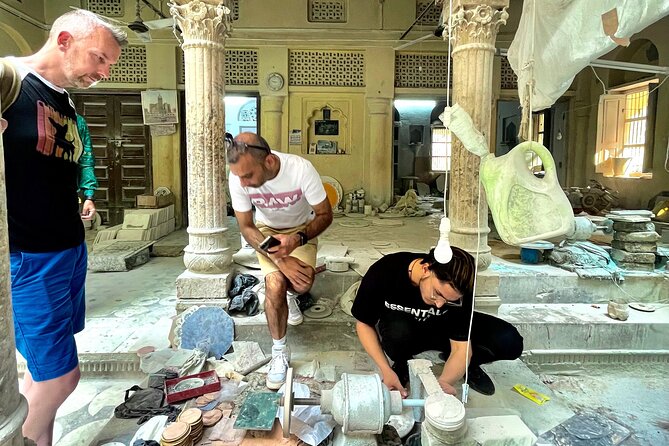
For me, Agra shows its real skill near the Taj. This two-hour walk takes you through handicraft workshops and homes around the Taj Mahal area, with photo chances and local life in the mix. I especially love the access to working artisan spaces, and the way it makes the Taj Mahal feel more human and achievable. One thing to consider: it depends on good weather, and parts of the day can feel a bit tight since you’re moving through lanes and workshops.
I also liked how flexible it felt. You can choose a time that fits your day, and pickup is possible by private car or tuk tuk (or you can go tour-only). The guide coordination matters here too, and one name that keeps showing up is Arhaan, who was reported as clear and on time, with small extra stops that add extra context as you walk.
In This Review
- Key points you’ll care about
- Walking the Taj Mahal lanes away from the crowd
- Zardozi gold embroidery: the slow craft behind the sparkle
- Pietra Dura marble inlay: descendants and a Taj Mahal origin story
- Flower garlands and body jewelry: everyday work around Taj lanes
- Marble Prachinkari and how it connects to Pietra Dura
- Carpetmaking in the home: design evolution you can actually see
- Price, pickup, and timing for a smooth 2 hours
- Who this handicraft walk is best for
- What could feel like a drawback?
- Final verdict: should you book the Taj Mahal Handicraft Walk?
- FAQ
- How long is the Taj Mahal Handicraft Walk?
- Where does the tour start and end?
- What does the price include?
- Is pickup included?
- Is this a private tour?
- What handicrafts will you see on the walk?
- Are there different tour times available?
- Do I need a ticket before I go?
- Does the tour run in any weather?
- What is the cancellation policy?
Key points you’ll care about

- Workshops inside working homes: You’re not just looking from the street.
- Zardozi gold embroidery: Learn how the old craft is still made by hand.
- Pietra Dura marble inlay links back to the Taj: A craft story with direct ties.
- Fresh-flower garlands and body jewelry: See how everyday materials shape a local industry.
- Marble Prachinkari and carpetmaking: Crafts that connect to each other through shared origins and changing designs.
- Good flexibility: Several tour times, plus optional pickup by private car or tuk tuk.
Deeper into the old lanes of Agra
Walking the Taj Mahal lanes away from the crowd
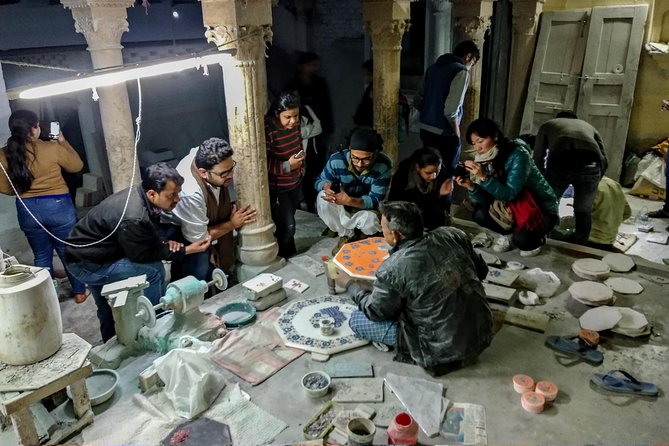
This walk is designed for people who want more than a fast Taj picture. You’ll stroll around the Taj Mahal area on lanes that feel more like normal neighborhood paths than a formal tourist route. That matters. When you’re not stuck in dense crowds, you can actually watch what’s happening around you: who’s working, what tools people use, and how daily life runs parallel to one of the world’s most famous monuments.
Because the focus is handicrafts, the pacing is about meeting people and seeing process. It’s also a good fit if you’re doing the Taj Mahal first. After you’ve stared at the marble and the symmetry, it clicks. Suddenly you understand what the people around you have been training for: embroidery, inlay, flower-based ornament, and other artisanal skills.
You’ll start at The Orchid Retreat (Taj Nagri Phase 1, Taj East Gate Road area). Then the tour ends back at the meeting point, which keeps the logistics simple for a short, two-hour experience.
Zardozi gold embroidery: the slow craft behind the sparkle
One of the first stops is an older workshop connected to zardozi, gold embroidery. If you’ve seen gold thread used only as decoration in the past, this is where it changes from look-to-understand. You’ll get a brief introduction to the craft’s background and then see details of how the stitching and ornamentation work.
What I like about this stop is the balance between story and technique. The guide isn’t just saying the craft is beautiful. You’ll learn where it comes from and the kinds of intricacies artisans pay attention to when they work with thread and metallic-looking materials.
Also, zardozi is the kind of craft that helps you notice the Taj Mahal differently. It reminds you that the region’s “ornament” tradition isn’t limited to marble. It’s a whole style of workmanship—patterning, repetition, and patient labor—that shows up in multiple art forms across the city.
Pietra Dura marble inlay: descendants and a Taj Mahal origin story
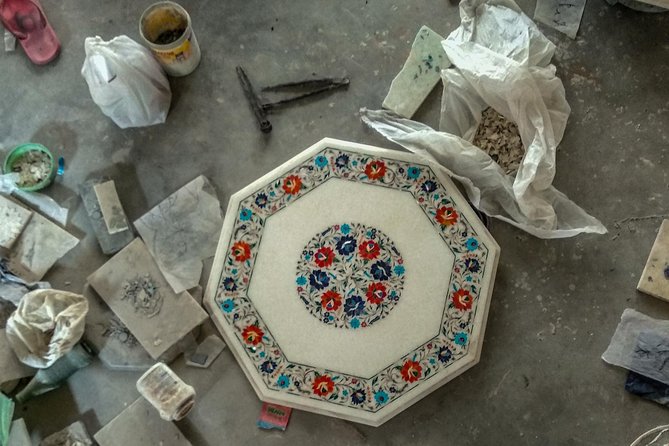
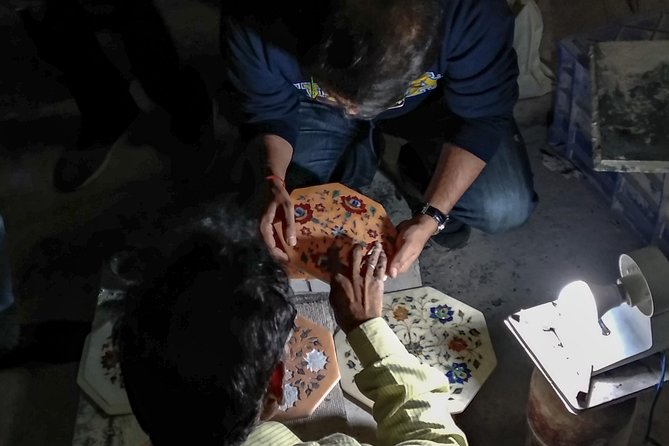
Next comes marble inlay (Pietra Dura). This is a key stop because it directly connects the craft to the Taj Mahal story. You’ll learn how Pietra Dura started and how it grew over time, and you’ll hear that the artisans here are descendants of artisans who made the Taj Mahal.
That detail is worth your attention. It changes your mental picture from Taj Mahal as a single monument to Taj Mahal as a living legacy of craft skills passed down through families. And when you see how inlay work is done, it becomes easier to understand why it took so long and why the results look so exact.
A practical takeaway: this stop is ideal if you’re the type who likes to know the “how,” not just the “what.” The workshop format is built for that. You’ll watch the craft environment and get the explanation alongside it.
Flower garlands and body jewelry: everyday work around Taj lanes
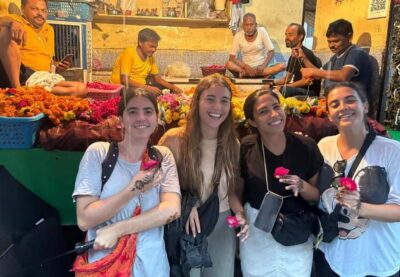
Then you shift from stone-and-thread to something more immediate: fresh flowers. You’ll walk down 17th-century lanes near the Taj Mahal area and visit households where people make garlands and other body jewelry of fresh flowers.
This part is memorable because it’s not abstract. You’re seeing a craft that depends on seasonality and daily supply. The guide also explains how the use of fresh flowers has changed over time and how those shifts affect the industry. That’s a useful angle, because it makes the work feel connected to real life rather than frozen in time.
Photo-wise, this is often where you’ll get some of your best images that don’t feel like standard tourist shots. And it’s also one of the easiest places to notice the difference between “souvenir” and “craft labor.”
More marble inlay and bazaar finds
- Agra: Sadar Bazar Food Market Night Walking Tour by Tuk-Tuk★ 4.9 · 25 reviews
- Agra: Street Food Tour with Spice Market on Tuk-Tuk Ride★ 4.7 · 23 reviews
- Agra: Street Food and Walk Tour with Spice Market by Tuk-Tuk★ 5.0 · 18 reviews
- Taj Mahal Handicraft Walk: Explore True India with Artisans★ 5.0 · 16 reviews
- Agra Shopping Tour with Guide★ 5.0 · 15 reviews
Marble Prachinkari and how it connects to Pietra Dura
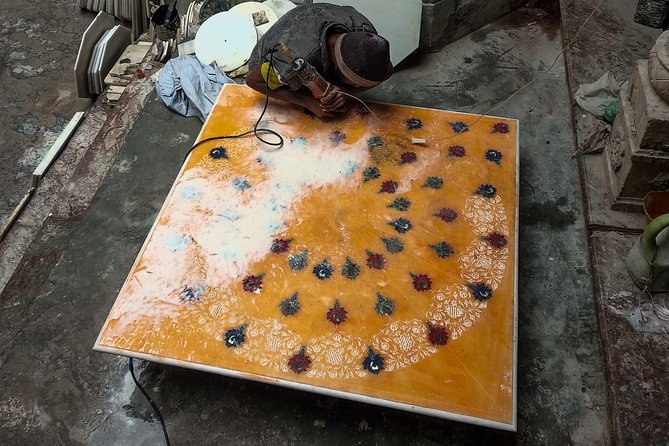
After that, the walk includes a three-generation-old workshop for marble Prachinkari work. Here, the important link is not just that Prachinkari is handmade. You’ll also learn the connection between Prachinkari and Pietra Dura.
This stop helps you build a craft map in your head. Instead of treating each workshop as a separate story, the guide connects them. That’s how the city’s artisan identity makes sense as a system: shared materials, shared design logic, and related techniques that evolve over time.
If you liked the Pietra Dura stop, you’ll likely enjoy this one because it adds another layer to the same overall theme—marble artistry—while still keeping the craft distinct.
Carpetmaking in the home: design evolution you can actually see
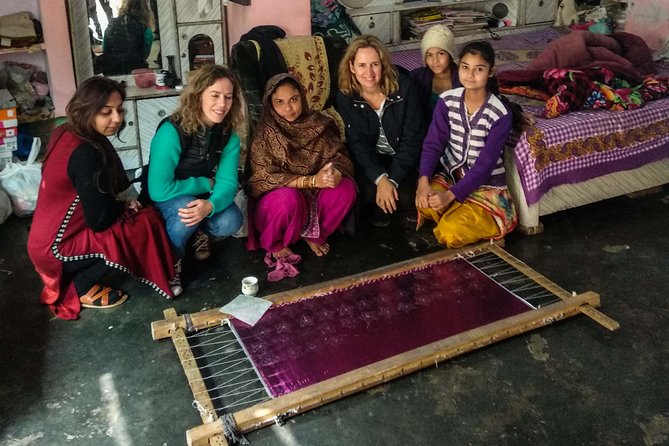
The final portion leans into a household craft: carpetmaking. You’ll explore the home-based side of it and learn how present-day designs evolved through cross-community acculturation.
This is one of those details that feels small until you apply it. When you understand that patterns and styles can shift due to cultural contact and changing tastes, carpetmaking stops being “just rugs.” It becomes visual history: different influences mixing into designs you can still recognize today.
You don’t need to be a carpet expert to appreciate this part. The value here is seeing craft in a living setting, where designs are part of ongoing work, not museum display.
Price, pickup, and timing for a smooth 2 hours
At $15.88 per person for about two hours, this walk is good value if you want real artisan access without spending a full day. Most of the cost covers the guide and entry into the artisan homes and workshops. Private transportation isn’t included, but pickup is available as an option—either private car or tuk tuk—or you can choose the tour-only approach.
That flexibility is practical. If you already plan to be near the Taj East Gate area, tour-only might be easiest. If your day is tight, pickup can save you time and hassle.
One more timing note: there are several tour times throughout the day. That helps you coordinate with the rest of your itinerary—especially if you’re also seeing the Taj Mahal on the same visit.
Who this handicraft walk is best for
This experience fits you best if you want:
- a short add-on to your Taj Mahal day
- hands-on craft explanations (even if they’re brief)
- photos that come from real life, not just crowds
- a chance to buy souvenirs directly connected to working artisans, often at better prices than in standard stores
It also works well if you’re traveling with mixed ages, since the overall format is a manageable walk plus workshop visits. And because it’s described as a private tour/activity for your group, it tends to feel more personal than big group bus tours.
What could feel like a drawback?
The main trade-off is time depth. You get “learn briefly” for each craft, not a long masterclass in any one discipline. If you’re hoping for deep technical training, this won’t replace that.
The other consideration is weather. This experience requires good weather, and if it can’t run due to poor conditions, you’ll be offered a different date or a refund.
Final verdict: should you book the Taj Mahal Handicraft Walk?
If you’re visiting Agra and planning a Taj Mahal day, I think this is one of the smartest ways to add meaning to your time. You’ll come away with a clearer sense of where the beauty around you comes from—zardozi embroidery, Pietra Dura inlay, flower-based ornament, Prachinkari marble work, and home carpetmaking—all explained in a way that’s quick, practical, and easy to remember.
Book it if you want:
- artisan access without a long time commitment
- a less crowded, more local Taj-area experience
- a chance to meet craftspeople and shop directly where you’re seeing the work
Skip it only if you’re trying to avoid walking in lanes or you need a very structured, museum-style schedule. If you’re happy with a guided walk plus multiple workshop stops, this one’s a strong choice.
FAQ
How long is the Taj Mahal Handicraft Walk?
It runs for about 2 hours.
Where does the tour start and end?
It starts at The Orchid Retreat (Plot No 28, Taj Nagri Phase 1, Taj East Gate Road area, Shilpgram Rd, Agra) and ends back at the same meeting point.
What does the price include?
The price includes a tour guide and entry to artisans homes.
Is pickup included?
Pickup is offered, but private transportation is not included. You can opt for pickup by private car or tuk tuk, or choose a tour-only option.
Is this a private tour?
It’s listed as a private tour/activity, meaning only your group participates.
What handicrafts will you see on the walk?
You’ll visit workshops for zardozi (gold embroidery), marble inlay (Pietra Dura), marble Prachinkari, and you’ll also see household work for fresh-flower garlands/body jewelry and carpetmaking.
Are there different tour times available?
Yes. Several tour times are available throughout the day for flexibility.
Do I need a ticket before I go?
A mobile ticket is used, and confirmation is received at the time of booking.
Does the tour run in any weather?
It requires good weather. If it’s canceled due to poor weather, you’ll be offered a different date or a full refund.
What is the cancellation policy?
You can cancel for free up to 24 hours in advance for a full refund. If you cancel less than 24 hours before the start time, the amount paid is not refunded.
More Tour Reviews in Agra
- Agra: Skip-the-Line Taj Mahal & Agra Fort Private Tour
★ 4.9 · 1,546 reviews - Agra: Taj Mahal Express Entry Tickets
★ 4.8 · 684 reviews - Agra: Taj Mahal and Mausoleum Guided Tour with Skip-the-Line
★ 4.8 · 631 reviews - Agra: Taj Mahal & Mausoleum Skip-the-Line Tour with Options
★ 4.9 · 456 reviews - Private Guided Tour of Agra
★ 5.0 · 420 reviews
Bazaars & Marble Workshops
- Agra: Street Food Walking Tour, Spice Market, & Tuk-tuk Ride
★ 4.9 · 102 reviews - Agra: Sadar Bazar Food Market Night Walking Tour by Tuk-Tuk
★ 4.9 · 25 reviews - Agra: Street Food Tour with Spice Market on Tuk-Tuk Ride
★ 4.7 · 23 reviews - Agra: Street Food and Walk Tour with Spice Market by Tuk-Tuk
★ 5.0 · 18 reviews - Agra Shopping Tour with Guide
★ 5.0 · 15 reviews
Old Agra on Foot
- Agra Walking Tour
★ 5.0 · 109 reviews - Agra: Street Food Walking Tour, Spice Market, & Tuk-tuk Ride
★ 4.9 · 102 reviews - Agra 101 City Walk
★ 5.0 · 41 reviews - Flavours of Agra Food walk
★ 5.0 · 25 reviews - Agra: Sadar Bazar Food Market Night Walking Tour by Tuk-Tuk
★ 4.9 · 25 reviews
Just Reviewed: The Latest Agra Tours










Agra Heritage & Old City Walks, compared.
 ★ 5.0Agra Walking TourFrom $11109 reviews
 ★ 4.9Street Food Walking Tour, Spice Market, & Tuk-tuk RideFrom $14102 reviews
 ★ 5.0Agra 101 City WalkFrom $4141 reviews
 ★ 4.9Sadar Bazar Food Market Night Walking Tour by Tuk-TukFrom $825 reviews
 ★ 5.0Flavours of Agra Food walkFrom $4825 reviews
 ★ 4.9Agra Fort: Guided UNESCO Heritage Walking TourFrom $621 reviews
 ★ 5.0Agra Old City Walking Tour, Private Heritage walking Guided TourFrom $2520 reviews
 ★ 5.0Street Food and Walk Tour with Spice Market by Tuk-TukFrom $1518 reviews
Browse the lists this tour appears in